
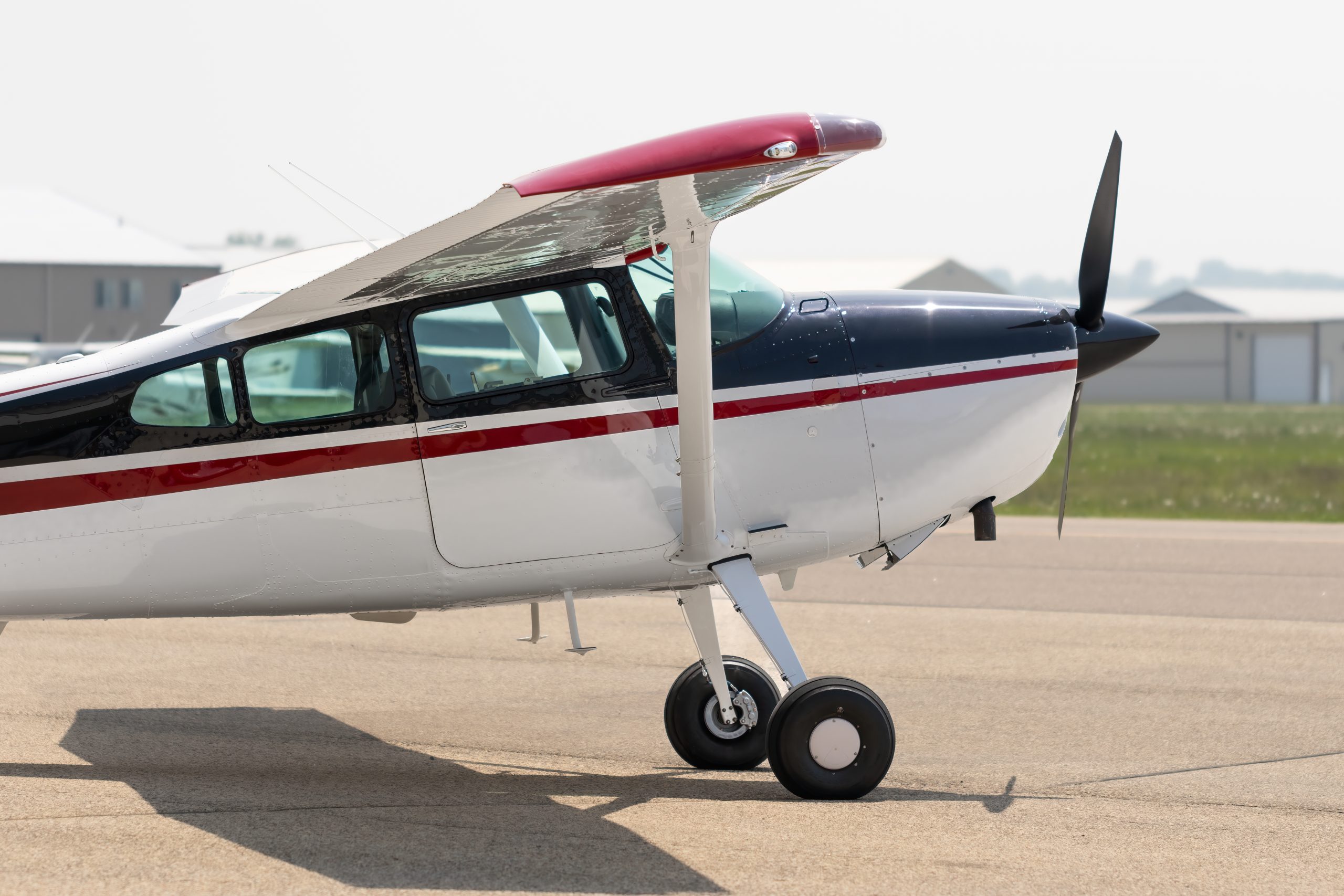
Stretch a 206 fuselage by nearly two feet, add a third row of seats, and you get the 207 — the largest, longest-cabin piston single Cessna ever certified. Built from 1969 (as the Skywagon 207) through the early 1980s, the 207A Stationair 8 paired a 300-hp fuel-injected Continental IO-520-F with 165 cubic feet of cabin for up to eight occupants or a serious load of cargo.
| Engine | Teledyne Continental IO-520-F |
|---|---|
| Horsepower | 300 hp @ 2,850 RPM (5-min takeoff) / 285 hp continuous |
| Seats | 8 (7-seat Stationair 7 configuration also offered) |
| Max speed (sea level) | 150 kt (173 mph) |
| Cruise (75% power) | 143 kt (165 mph) |
| Stall speed | 58 kt (67 mph) |
| Range | 350–525 nm depending on power setting and reserves |
| Useful load | 1,690 lb (3,800 lb gross − 2,110 lb empty, average equipment) |
| Max takeoff weight | 3,800 lb |
| Fuel capacity | 84 gal total / 77 gal usable (long-range tanks) |
| Service ceiling | 13,300 ft |
| Rate of climb | 810 fpm |
| Typical price | Used ~$150k–$375k depending on year, engine time, and avionics |
Figures above reflect the naturally-aspirated 207A Stationair 8 on long-range tanks; a Turbo Stationair 8 variant (TSIO-520-M) traded the same 300-hp takeoff rating for a 26,000-ft service ceiling and 170-knot cruise at altitude. For the shorter-cabin, six-seat Stationair from the same era, see our Cessna 206G Stationair page; for the current-production turbocharged Stationair, see our Cessna 206 Stationair buyer's guide.
As AOPA's aircraft fact sheet on the 207 puts it, Cessna had six-to-eight-place singles doing minivan work since the mid-1960s, "far roomier than the four-seaters from which they evolved." AOPA's own weight-and-balance example makes the point concretely: a family of five with a week's luggage and full 84-gallon tanks still lands well within gross weight, with room to spare in the wide CG envelope — a packaging trick Cessna never repeated at this scale in a piston single.
Unlike the Skylane and Stationair 6, the 207's 8-seat piston formula was never revived. At EAA AirVenture Oshkosh 2026, Textron Aviation's booth #78 lineup listed the Skyhawk, Skylane, Turbo Stationair (206), and Grand Caravan EX — the closest thing to a spiritual successor to the 207's cabin volume is now a turbine, several classes up in price, complexity, and useful load. Buyers who want this exact seating and cargo capacity in a piston airframe are shopping a discontinued model, which keeps used 207s in steady demand among Alaska and backcountry operators.
Current asking prices on the broader Cessna 205/206/207 group have ranged from roughly $95,000 to $949,000 as of mid-2026, with individual 207s more typically clustering in the $150,000–$375,000 band depending on total time, engine overhaul status, and avionics, per current listings data. The IO-520-F shares the same well-supported parts and overhaul network as the 206G, and the 207 finances cleanly as a certified single, with terms up to 20 years and 15%-20% down typical for classic pistons.
| 207 Stationair 8 (1969-84) | 206G Stationair 6 II | T206H (current) | |
|---|---|---|---|
| Engine | Continental IO-520-F, 300 hp | Continental IO-520-F, 300 hp | Lycoming TIO-540-AJ1A, 310 hp turbo |
| Cabin | Stretched, 3rd-row seating, 165 cu ft | Standard Stationair cabin, 6 seats | Standard Stationair cabin, 6 seats |
| Useful load | ~1,690 lb | ~1,635 lb | Up to ~1,450 lb (HD) |
| Best for | Max seats/cargo in a piston single | Refined classic hauler | Speed + altitude + support |
For the standard-length classic Stationair, see our Cessna 206G Stationair page; for the current-production turbocharged Stationair, see our Cessna 206 Stationair buyer's guide.
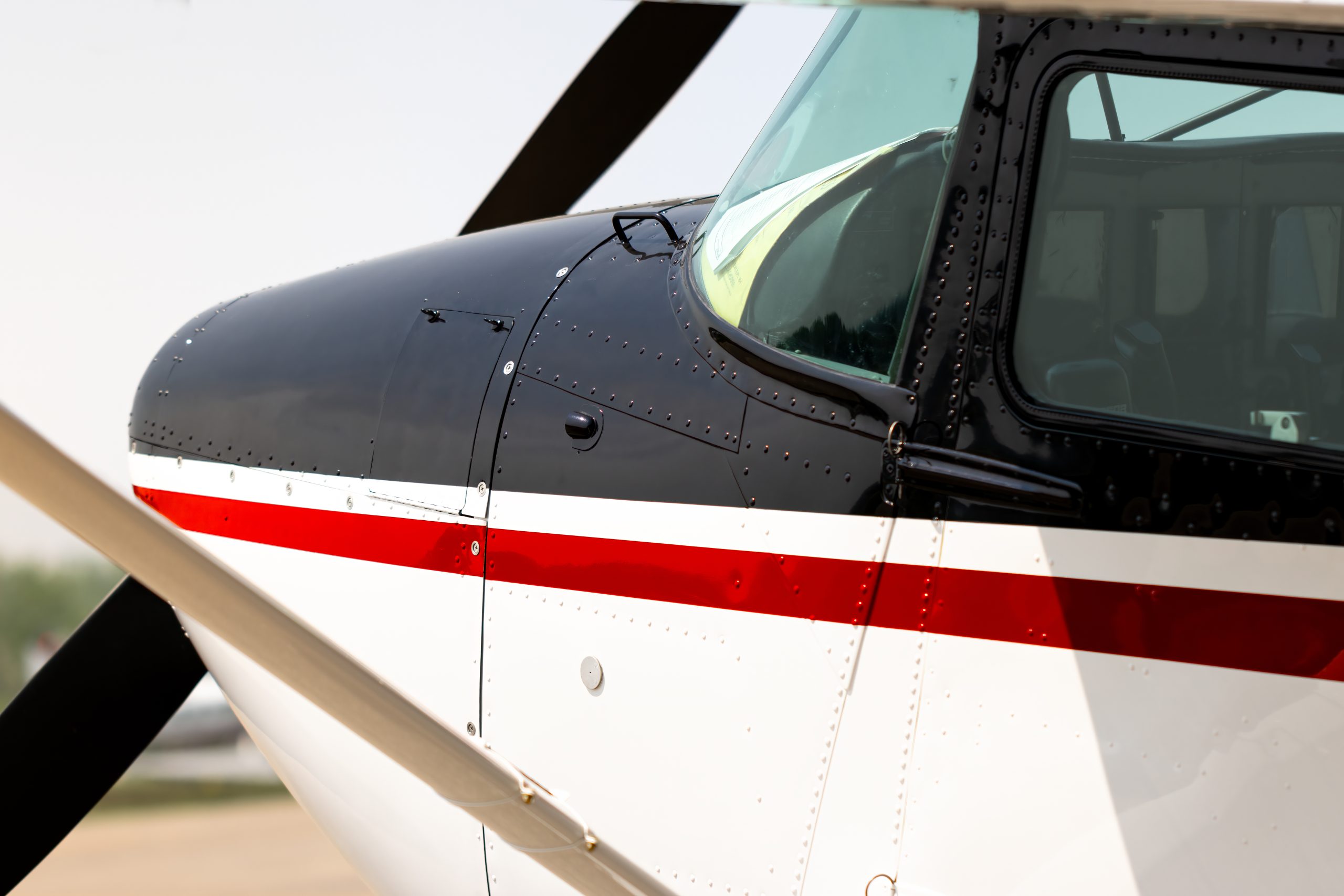
Individual 207s typically trade from about $150,000 to $375,000 depending on total airframe time, engine overhaul status, and avionics; the broader Cessna 205/206/207 group has ranged as wide as $95,000 to $949,000 as of mid-2026 listings data.
The naturally-aspirated 207A cruises around 143 knots (165 mph) at 75% power, with a top speed near 150 knots; the turbocharged Turbo Stationair 8 variant reaches roughly 170 knots at altitude.
Eight in the Stationair 8 configuration, or seven in the Stationair 7 configuration — both stretched about two feet longer than the six-seat 206, with 165 cubic feet of cabin volume.
Both share the same 300-hp Continental IO-520-F engine, but the 207 has a fuselage stretched roughly 22 inches aft of the wing for a third row of seats, raising seating to seven or eight versus the 206's six, at a modest cost in useful load and cruise speed.
Yes, as a certified single with terms up to 20 years and 15%-20% down typical for classic pistons of this era.
Sources: AOPA, Cessna 207 aircraft fact sheet; Plane & Pilot, Cessna "Stationair 8"/"Skywagon" 207 international aircraft directory entry; Textron Aviation, EAA AirVenture Oshkosh 2026 exhibitor announcement (July 2026); Controller.com and Hangar67 current listings data (2026).
Talk to a specialist
Tell us how to reach you and a FLYING Finance specialist will follow up to talk through rates, down payment and timing for the aircraft you have in mind.
Prefer to call? (702) 757-1176