Pilatus PC-12 Financing · PC-12 PRO · NGX · NG · Pre-Owned · Built in Stans, Switzerland since 1991
More than 2,000 PC-12s delivered across 60 countries. The PC-12 is not just the best-selling single-engine turboprop ever built — it is among the most liquid pre-owned turbine aircraft on the market. That liquidity, combined with Pilatus’s consistent residual value story, makes the PC-12 one of the strongest collateral positions in turbine aviation finance.
The collateral case
Lenders follow liquidity. The PC-12 has the deepest pre-owned market of any single-engine turboprop ever built — more than 2,000 aircraft across 60 countries, a consistent global dealer network, standardized maintenance infrastructure, and a manufacturer that has never exited the product.
The PC-12 family holds value better than most turboprops in its class. The transition from NG to NGX to PRO has been managed carefully — each generation upgrade has pulled older variants forward rather than collapsing them. Lenders underwriting PC-12 collateral are working with an asset they understand and one that has never been abandoned by its manufacturer.
At any given moment, 30–50 PC-12s are available for sale in the U.S. market. That depth means lenders can model realistic exit scenarios. PC-12 transactions close faster than most turboprops in the $3M–$7M range, which translates directly into lender comfort and favorable underwriting terms for qualified borrowers.
The PC-12 is Part 23 certified for single-pilot IFR operations. For owner-pilots, this eliminates the crew cost that makes comparable twin-engine turboprops uneconomical. The PC-12 PRO adds Garmin Emergency Autoland — an industry-first for single-engine turboprops — further narrowing the operational gap with light jets at a fraction of the acquisition and operating cost.
The PC-12’s aft cargo door, flat floor, and reconfigurable cabin allow it to operate as a business aircraft, air ambulance, cargo hauler, or surveillance platform. That versatility means the aircraft can be repositioned operationally across a wide range of use cases — lenders view it as collateral resilience built into the design.
The PC-12 lineup
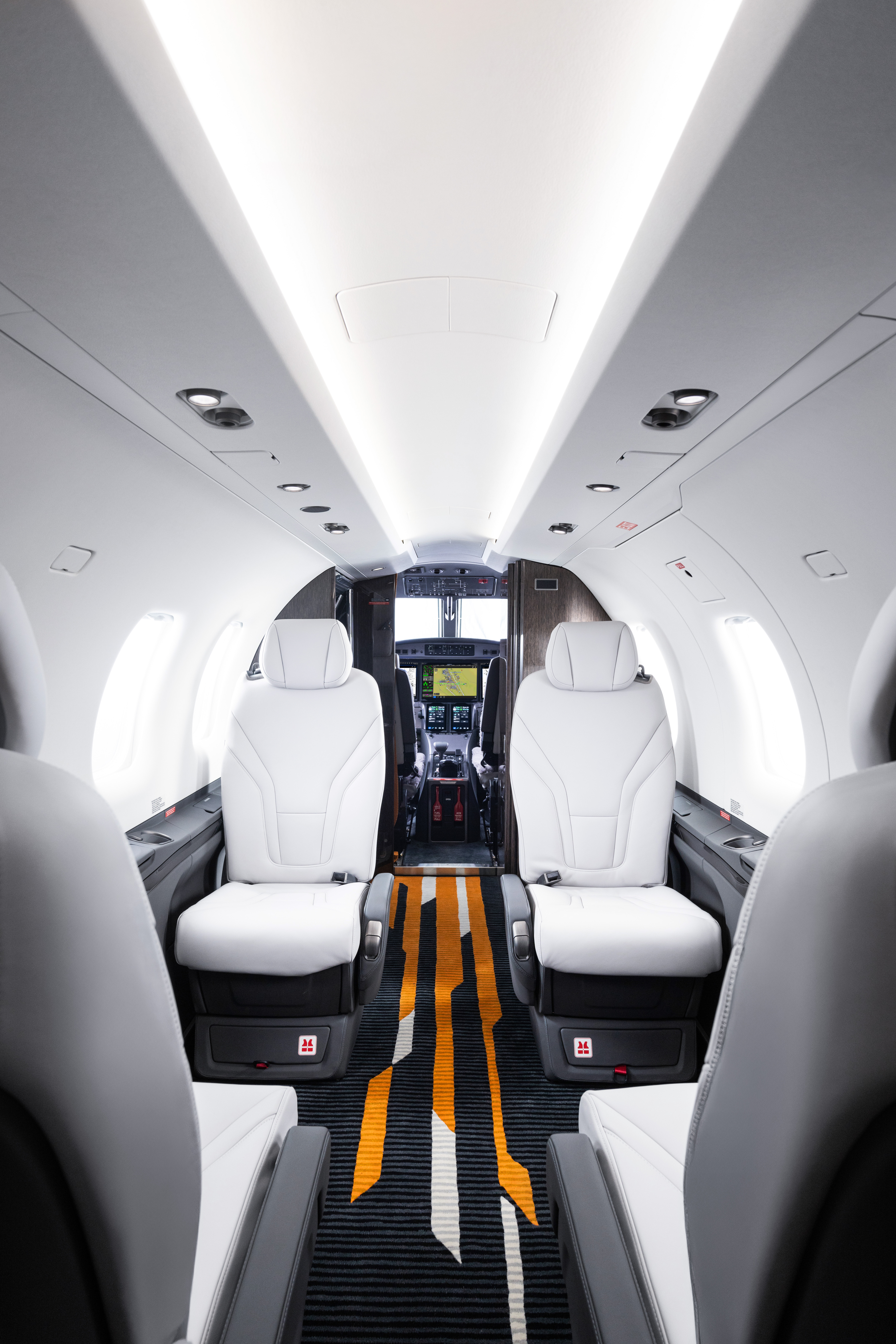
Garmin G3000 Prime (industry-first for PC-12), Emergency Autoland, BMW Designworks cabin, 100 lb useful load increase over NGX. 2–3 year delivery wait.
Best pre-owned value on the platform. Single-lever FADEC, autothrottle, 10% larger windows over NG. TBO of 5,000 hours — longest of any PC-12 variant.
The high-volume pre-owned segment. Glass cockpit, winglets, strong TBO. Ideal entry point for first-time PC-12 owners. Financing available on well-maintained examples.
Lower entry price, same PT6 reliability. Age-formula underwriting applies on older examples. Contact us to confirm lender eligibility and current terms before pursuing a specific airframe.
Same aft cargo door philosophy as the PC-12 in a twin-engine pressurized light jet. Finances on jet terms. Contact us for PC-24 specific structuring.
Legendary STOL utility platform built 1959–2019. Pre-owned market is thin but active. Finance on turboprop terms; contact us for current lender appetite on specific airframes.
PC-12 financing runs on turboprop terms — typically stronger than piston on amortization, with rates that reflect the aircraft’s deep liquidity and strong residual value story.
Pilatus Aircraft · Founded 1939, Stans, Switzerland
Pilatus Aircraft was founded in 1939 in Stans, in the canton of Nidwalden at the foot of the Swiss Alps. The company spent its first five decades building military trainers and the iconic PC-6 Porter utility aircraft — an aircraft so capable it became the standard for remote access operations worldwide. The commercial market was not really the plan until 1989, when Pilatus announced the PC-12 at NBAA with a simple premise: build the world’s most useful single-engine aircraft.
The first PC-12 flew in May 1991. By 2023, the 2,000th had been delivered — an achievement no other single-engine turboprop has approached. Through each generation — the original /45, the NG, the NGX, and now the PRO — Pilatus has maintained a discipline rare in aviation: genuine backward compatibility in parts and training, and a commitment to not abandoning earlier owners. A 2005 PC-12 owner and a 2025 PC-12 PRO owner share an ecosystem. That continuity is one reason lenders price the platform favorably.
The PC-12 PRO, announced March 2025, brings Garmin’s G3000 Prime integrated flight deck to the platform for the first time — the first PC-12 to carry Garmin rather than Honeywell. The move reflects both the industry’s shift toward the Garmin ecosystem and Pilatus’s willingness to make a clean break when the technology warrants it. The PRO also introduces BMW Group Designworks cabin styling and Garmin’s Emergency Autoland — a first for single-engine turboprops.
Tax strategy · December 31, 2026 deadline
Aircraft placed in service before December 31, 2026 may qualify for bonus depreciation under current IRS rules — potentially allowing a significant first-year deduction on the full purchase price of a qualifying business aircraft. On a $4.5M TBM 960 or $6M PC-12 NGX, the tax impact can exceed the total interest cost of the loan. FLYING Finance is not a tax advisor. Structure the transaction with your CPA and an aviation tax specialist before closing. Read our bonus depreciation guide →
How the financing works
Most lenders apply an age-plus-amortization cap on turboprop aircraft: the aircraft’s age plus the loan term cannot exceed 25 to 30 years. A 2005 PC-12 is 21 years old in 2026. At a 25-year cap, the maximum term is 4 years. At a 30-year cap, you get 9 years. Depending on your mission, we may be able to go out further. Contact us before committing to any pre-2003 airframe — we will tell you exactly what the financing picture looks like before you spend money on pre-buy.
Most PC-12 lenders require a pre-buy from a Pilatus-authorized service center. A clean pre-buy with no deferred maintenance is the fastest path to closing. Deferred items are not automatic disqualifiers, but they need to be disclosed, priced, and either corrected before closing or escrowed. Budget 2–3 weeks for the pre-buy process on a turbine transaction. Have a Pilatus already and need to refinance to cover an overhaul? We do that too.
Most lenders strongly prefer PC-12 aircraft enrolled in Pratt & Whitney’s ESP engine maintenance program or equivalent. An aircraft that is off-program is not automatically unfinanceable, but it faces more lender scrutiny and potentially higher down payment requirements. If the aircraft you are purchasing is off-program, get a cost-to-enroll estimate before you close.
Standard turboprop documentation: current airframe, engine, and propeller logbooks; annual inspection within 12 months; FAA registration; hull insurance binder; signed purchase agreement; and title search. Pilatus maintains thorough factory records on every serial number. Most PC-12 transactions close in 3–4 weeks from executed purchase agreement to funding.
Many turboprop owners offset operating costs by dry leasing their aircraft to other qualified pilots when they are not flying it themselves. Done correctly, a dry lease arrangement can recover $30,000–$80,000+ annually on a PC-12 or TBM. Done incorrectly, it creates FAA compliance exposure and can void your insurance. Understanding the rules before you finance matters — some lenders restrict lease arrangements without prior approval. Read our dry lease guide →
Turbine rates for well-qualified borrowers on newer PC-12 NGX and PRO aircraft start at 6.53% as of June 2026, on a 20-year amortization with 15% down. The PC-12’s strong collateral profile — 2,000+ aircraft, deep pre-owned market, consistent residuals — means lenders are competitive on this platform specifically.
Yes. A 2010 PC-12 NG is 16 years old in 2026. At a 30-year age cap, you can access up to a 14-year amortization. At a 25-year cap, the maximum is 9 years. Both are workable financing structures on an aircraft in the $3.5M–$4.5M range. Standard turboprop underwriting applies: pre-buy inspection, current logs, engine program enrollment preferred.
Both are strong collateral positions. The PC-12 wins on market depth — more aircraft sold, more lenders familiar with the platform, deeper pre-owned liquidity. The TBM 960 is faster (330 KTAS vs 290 KTAS) and carries lower operating costs per hour at cruise, but has a smaller pre-owned market. Rate and term structures are comparable for well-qualified borrowers on both platforms. The choice comes down to mission: PC-12 for payload and cargo flexibility, TBM for pure speed and single-pilot efficiency at altitude.
Yes, but Part 135 operation changes the underwriting profile. Lenders view charter-operated aircraft as higher-utilization collateral and typically require commercial insurance, increased hull coverage, and sometimes a higher down payment. Disclose intended use upfront — it is not a deal-killer, but it changes which lenders and terms apply.
For new PC-12 PRO orders with 2–3 year delivery timelines, financing is typically structured as a deposit loan or commitment letter. The full loan funds at delivery. We can structure deposit financing and lock rate structures for qualified borrowers while you wait for your aircraft to come off the line. For buyers who want the PRO platform without the wait, the pre-owned NGX market is the most direct path.
On a PC-12 NGX or PRO, the standard minimum is 15% down for a well-qualified borrower. Pre-2008 aircraft and off-program engines typically require 20%. A soft-pull credit review takes two minutes and tells you exactly where you stand before you commit to a pre-buy inspection.
Tools & resources
Model a specific PC-12 transaction, check current turbine rates, or read what FLYING and AvBuyer have said about the platform.
From the flight deck
The PC-12 is one of the most written-about turboprops in general aviation. Here is the editorial record from two sources that know the aircraft.
Amelia · FLYING Finance AI specialist
Talk to a specialist
Tell us how to reach you and a FLYING Finance specialist will follow up to talk through rates, down payment and timing for the aircraft you have in mind.
Prefer to call? (702) 757-1176
Related market data: see piston aircraft transaction index, GA aircraft shipments (GAMA) and aircraft loan rates vs. the 5-year Treasury, updated from primary sources.