
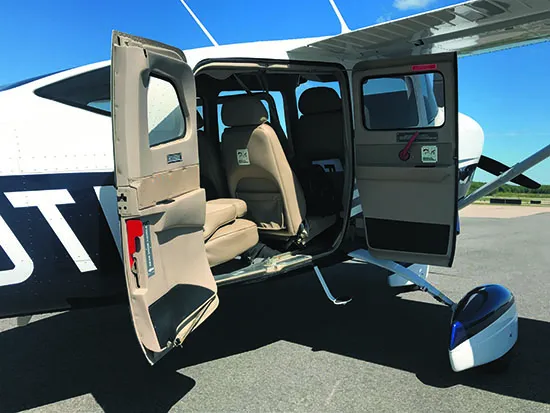
The final and longest-produced suffix of the classic Stationair — built 1977 through 1986, when Cessna halted its entire piston-single line. The 206G paired a 300-hp fuel-injected Continental IO-520-F with the biggest cabin and cargo doors in the Cessna single lineup.
| Engine | Teledyne Continental IO-520-F |
|---|---|
| Horsepower | 300 hp @ 2,850 RPM (5-min takeoff) / 285 hp continuous |
| Seats | 6 |
| Max speed (sea level) | 156 kt |
| Cruise (75% power, 6,500 ft) | 147 kt |
| Max range (10,000 ft, 76 gal usable) | 755 nm / 6.5 hrs |
| Useful load | 1,635 lb (Stationair 6 II, 6 seats, long-range tanks) |
| Max takeoff weight | 3,600 lb (3,612 lb ramp) |
| Fuel capacity | 84 gal total / 76 gal usable (long-range tanks) |
| Service ceiling | 14,800 ft |
| Rate of climb | 920 fpm |
| Typical price | Used ~$200k–$400k depending on year, engine time, and avionics |
Figures above are from the 1978 factory POH for the Stationair 6 II on long-range tanks; standard-tank aircraft (61 gal usable) trade range for a lighter empty weight, and earlier/later 206G model years through 1986 share the same IO-520-F powerplant with minor equipment changes. For the current-production turbocharged Stationair, see our Cessna 206 Stationair buyer's guide; for the smaller-cabin Skylane sibling, see our Cessna 182Q Skylane page.
The 206G's reputation as the definitive classic Stationair is well-earned, but as Plane & Pilot's history of the line lays out, the airplane's biggest handling upgrade — the cuffed, camber-lift wing that improved slow-speed manners at almost no cost to cruise — arrived in 1972 on the U206E, two suffix letters before the G. Folklore among backcountry buyers even names the lighter U206F as the sweet spot: the earliest airframe that already has the good wing, without the added equipment weight Cessna piled on through the G's decade-long run. None of that makes the 206G a lesser airplane — it's simply an honest reason some shoppers cross-check F-model prices before committing to a G.
The classic 206G's silhouette is still exactly what Textron Aviation builds today. At EAA AirVenture Oshkosh 2026, Textron's booth #78 lineup listed the "Cessna Turbo Stationair (206)" alongside the Skyhawk, Skylane, and Grand Caravan EX — confirmation that the big-door, high-wing utility hauler this 1978 airframe pioneered is still a current, actively-marketed product line rather than a discontinued relic. The direct descendant, the Lycoming-powered Turbo Stationair HD, carries the same cargo-door utility mission at roughly triple the horsepower and altitude capability of this classic G.
Current asking prices on clean U206G airframes run roughly $200,000 to $400,000 depending on total time, engine overhaul status, and avionics, per current Controller.com listings. The IO-520-F is a well-understood, widely-supported engine with a healthy parts and overhaul network, and the 206G finances cleanly as a certified single — the same lender familiarity that applies to the current T206H, with terms up to 20 years and 15%-20% down typical for classic pistons.
| 206G (1977-86) | 206F (1973-76) | T206H (current) | |
|---|---|---|---|
| Engine | Continental IO-520-F, 300 hp | Continental IO-520-F, 300 hp | Lycoming TIO-540-AJ1A, 310 hp turbo |
| Wing | Camber-lift (since 1972) | Camber-lift (since 1972) | Modern high-lift, fixed gear |
| Useful load | ~1,635 lb (6 II, long range) | Lighter empty weight, similar gross | Up to ~1,450 lb (HD) |
| Best for | Refined classic hauler | Lightest airframe, same wing | Speed + altitude + support |
For the smaller-cabin Skylane family from the same era, see our Cessna 182Q Skylane page; for the current-production turbocharged Stationair, see our Cessna 206 Stationair buyer's guide.
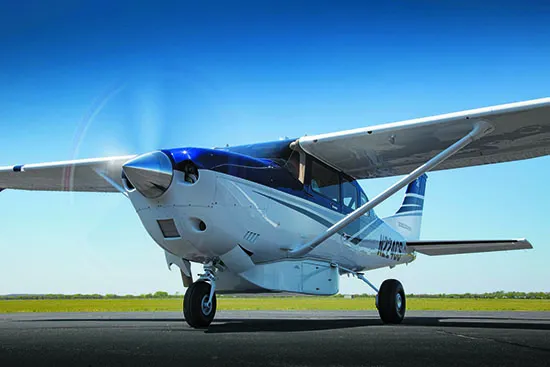
Current asking prices run roughly $200,000 to $400,000 depending on total airframe time, engine overhaul status, and avionics, per current listings data.
Factory numbers show 156 knots max speed at sea level and 147 knots cruising at 75% power at 6,500 feet, with a maximum range near 755 nm on long-range tanks at 10,000 feet.
Both share the same 300-hp Continental IO-520-F and the camber-lift wing introduced in 1972. The G ran longer (1977-1986) and added the higher-trim "Stationair 6 II" package and running equipment changes; some backcountry buyers prefer the lighter F for the same wing with less added weight.
1,635 pounds for a Stationair 6 II configured with long-range tanks and six seats, per the 1978 factory POH; standard-tank and utility-interior configurations vary.
Yes, as a certified single with terms up to 20 years and 15%-20% down typical for classic pistons — the IO-520-F is a well-supported, lender-familiar engine.
Sources: Plane & Pilot, Cessna 205/206/"Stationair"; Cessna 1978 Model U206G Stationair Pilot's Operating Handbook, factory performance specifications; Textron Aviation, EAA AirVenture Oshkosh 2026 exhibitor announcement (July 2026); Controller.com current listings data.
Talk to a specialist
Tell us how to reach you and a FLYING Finance specialist will follow up to talk through rates, down payment and timing for the aircraft you have in mind.
Prefer to call? (702) 757-1176