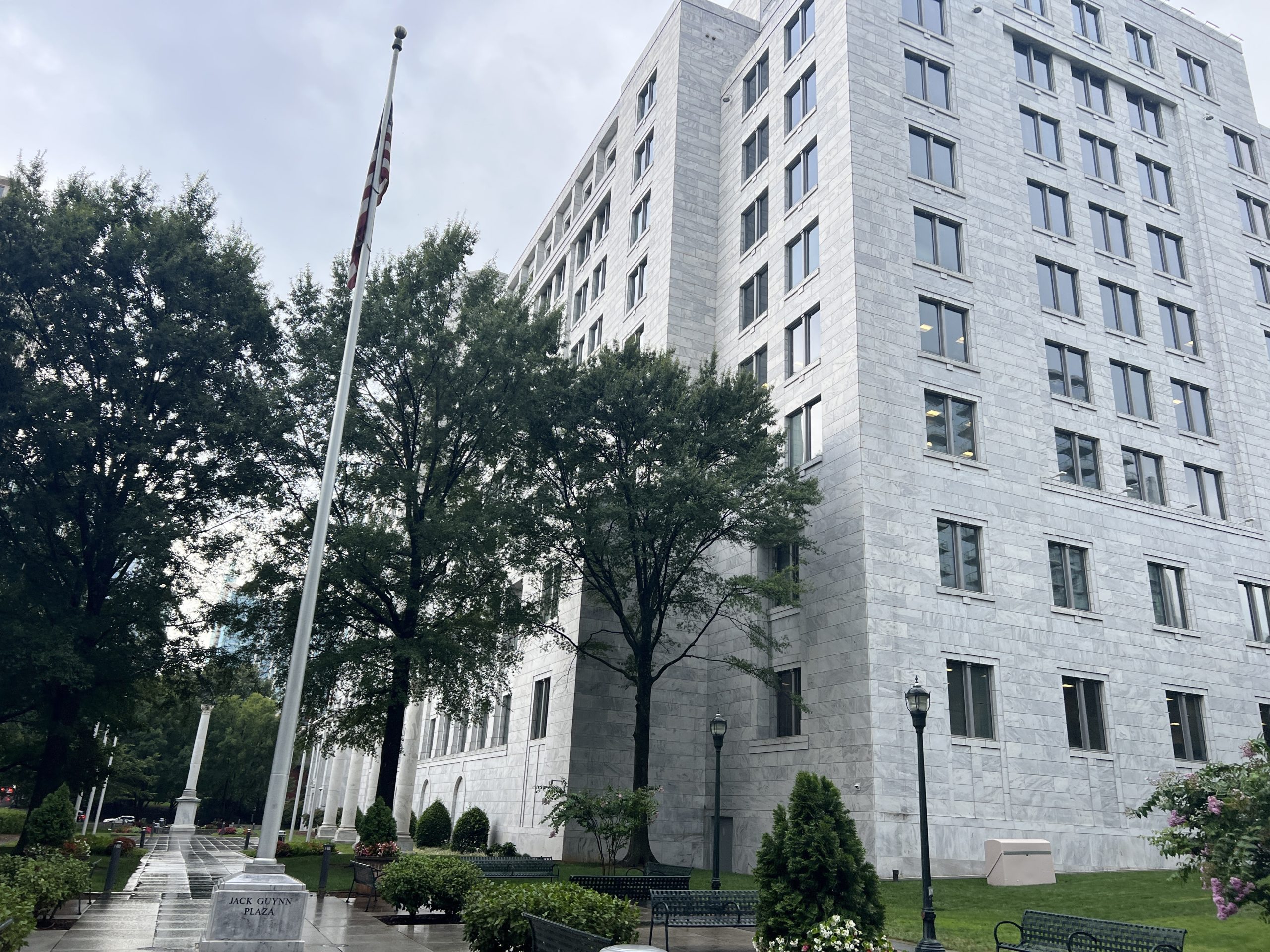
Chair Warsh's Jackson Hole remarks confirm what the calendar already implied: the pause is over and the Fed is chasing inflation again.
I indicated back in the Spring that rates were unlikely to change before the midterms, no matter how impartial the Fed is supposed to be, and then rise to chase inflation that was sure to come. While some bankers were still calling for cuts back then, Chair Warsh came into the job with a message that the Fed is about to go quieter and about to go up on rates. That was never a forecast built on hope for cuts. It was a read on the mechanics of the calendar and the persistence of the inflation data underneath it. What's happening now isn't a surprise or a reversal of consensus. It's that call arriving on schedule. The Fed funds target still sits at 3.50% to 3.75%, unchanged since the last cut in December 2025, but the forward curve implied by the CME FedWatch Tool has moved hard in the last month, from pricing a plausible hold at the September 16 meeting to pricing a 66% probability of a 25-basis-point hike, which would push the range to 3.75% to 4.00%. If you're financing anything longer than a few months out, an aircraft loan, a fleet lease, a working-capital line, the base case you're underwriting to needs to reflect that the pause is over and the chase has begun.
Kevin Warsh is the sitting Chairman of the Federal Reserve, not a governor auditioning for the job. President Trump nominated him on March 4, 2026, the Senate confirmed him in a 54 to 45 vote on May 13, the most divided confirmation vote in the Fed's history, and Warsh took the oath of office on May 22, with the FOMC unanimously electing him its chairman the same day. He succeeded Jerome Powell, whose term as chair ended May 15. Per the custom for outgoing chairs, Powell remains on the Board of Governors, where his term as a governor runs through 2028.
The part worth sitting with is what Trump expected to get out of this appointment versus what he's gotten so far. Trump spent much of Powell's final year in office attacking him publicly, at one point accusing him of a "too late," multi-hundred-billion-dollar mistake for not cutting sooner, and has made no secret that he expected Warsh, once installed, to lean toward lower rates. Three months into the job, at the one speech every Fed chair uses to set the tone for their tenure, the Jackson Hole Economic Policy Symposium keynote, delivered August 28, Warsh did the opposite. He said inflation remains "concerning," reaffirmed the Fed's 2% PCE target as "a firm, fixed target" rather than an aspiration, and stated plainly that inflation is unlikely to return to target on its own, language that markets read, correctly, as an opening for rate increases rather than cuts if the data doesn't cooperate. Whatever the political expectations attached to his appointment, the chairman's first major independent test of his own credibility appears to be resolving in the direction of tighter policy, not looser. We're not going to referee the politics of who expected what from whom. We are going to underwrite to what the sitting chairman actually said, in public, at the podium that matters most.
That's also the moment CME FedWatch's probabilities pivoted. Odds of a September hike had actually fallen earlier in August after a weak July jobs report suggested the labor side of the mandate was softening enough to justify a hold. Warsh's Jackson Hole remarks reversed that in the span of a single week, and by August 31 the market was pricing better than two-in-three odds of a hike. That kind of swing, from "probably a hold" to "probably a hike" inside ten days, on the words of one speech, is itself a data point: it tells you how thin the market's confidence in a dovish path actually was, and how quickly it can reprice once the person in charge signals otherwise.
The "transitory, it'll fade on its own" framing that dominated 2021 doesn't fit what's happening in 2026, and Warsh said so directly. The mechanics are worth walking through because they explain why this isn't a garden-variety sticky-inflation quarter.
Headline CPI hit 4.2% year-over-year in the spring of 2026, a three-year high, and the single largest driver by far was energy, which spiked more than 60% of the monthly increase in the worst month and posted year-over-year gains in the 23% to 28% range, driven substantially by the Iran conflict and the resulting disruption to shipping through the Strait of Hormuz. That's not a demand-side story about an overheating economy; it's a geopolitical supply shock sitting on top of an already-firm underlying trend, and it's the kind of inflation the Fed has the least ability to reason its way around, because raising rates does very little to un-disrupt a shipping lane.
Strip out energy and the picture doesn't get comfortable, it just gets slower-moving. Core PCE, the Fed's preferred gauge, has been running in the 3.3% to 3.7% range through the summer, more than a full point above the 2% target, and the composition of that stickiness has shifted in a way that matters for how long it persists. Shelter (Housing), which was the dominant post-pandemic inflation villain from 2022 through 2024, has actually cooled meaningfully. Shelter's year-over-year contribution has drifted back down toward roughly 3.2% to 3.4%, closing in on its pre-pandemic historical baseline. Housing starts data backs that up from the supply side: single-family construction has been trending down rather than up, with homebuilders throttling back new starts in the face of elevated mortgage rates and softer buyer demand, and new-home inventory now sitting above balanced levels in a lot of markets. A housing sector that's actively slowing rather than overheating is consistent with shelter's cooling contribution to core PCE, and it's a big part of why housing is no longer the main problem the way it was in 2022 and 2023.
The harder problem now is core services excluding housing, running close to 3.8% year-over-year, concentrated in healthcare, insurance, and financial services, categories that are fundamentally labor-cost-driven rather than commodity- or rate-sensitive, and that respond to monetary tightening only slowly and indirectly, because you can't raise the fed funds rate and make a hospital's staffing costs or an insurer's claims costs fall next quarter. This is the same issue the Fed has been battling since rates started rising in 2023: a non-rate-sensitive services economy that has largely brushed off every attempt to cool it, because its costs are driven by wages and labor availability rather than by the price of credit. Core goods, by contrast, have stayed genuinely tame at around 2.3% year-over-year, proof that this isn't broad-based overheating so much as a concentrated problem in services and energy that happens to be large enough to keep the headline number stuck well above target.
That combination, a geopolitical energy shock the Fed can't touch, layered on top of a labor-cost-driven services problem that moves slowly even when it does respond, is exactly the kind of inflation profile that argues for holding rates restrictive for longer than the market wants, rather than an ordinary soft patch that a rate cut would credibly fix.
Here's where this cycle breaks from every playbook built on the last several decades of Fed practice, and it's a more complicated story than "hiring has slowed." Job openings are sitting near an eight-year low, which in a normal cycle would be a green light to cut. But the labor force itself is shrinking, and that changes what a soft hiring number actually means.
Labor force participation fell to 61.5% by June 2026, the lowest level since March 2021, and, stripping out the COVID-era distortion entirely, the lowest reading since 1976. Roughly 720,000 workers left the labor force in June alone; over the trailing twelve months, the total is closer to a million. The causes are layered rather than singular. A meaningful share is demographic and mechanical: an aging population and the accelerating retirement wave of the baby boom generation, sometimes called the "demographic cliff," compounded by a statistical population correction made in January that reclassified part of the decline. But a real portion is behavioral. Immigration policy changes have constricted the supply of available workers, and part of the drop is concentrated among prime-age workers 25 to 54, including women who left jobs after employers mandated a return to office, citing childcare constraints. Longer-run projections from labor economists point to the labor force shrinking by roughly 3.7%, or 5.9 million workers, between 2025 and 2032, before any partial recovery.
That matters enormously for how the Fed should read "soft hiring." A shrinking labor supply chasing still-real demand for services is not the same signal as weak demand for labor in an economy with a normal, growing workforce. The former can support wage growth and services-sector cost pressure even while headline job-opening counts look soft, because employers are competing over a smaller pool rather than losing their appetite to hire. That's a structurally different, and more inflationary, kind of labor-market softness than the Fed's traditional models assume, and it's a second reason, independent of the AI-capex story, that the Fed's old playbook is giving a distorted reading right now.
The AI-capex buildout is the other force decoupling this cycle from its predecessors, and it's worth being precise about what it's doing, because the popular shorthand, "the AI economy is propping up GDP," is true but incomplete. GDP growth has held in a 1.8% to 2.3% range even with job openings near multi-year lows and a shrinking labor force, which on the surface looks like a contradiction: growth holding up while the labor market gets softer and smaller at the same time. The explanation is concentrated capital expenditure: AI infrastructure, data centers, and the compute buildout, running at extraordinary rates and propping up headline growth almost independent of how many people are actually being hired or how many are still looking for work.
Financial commentary through 2026 has increasingly reached for the "K-shaped economy" framing to describe this: asset markets and AI-linked sectors rising while lower-income consumers, small businesses, and rate-sensitive industries fall behind, with high-income households continuing to drive consumer spending while everyone else pulls back. That framing is directionally right but, we'd argue, understates the real split by collapsing two genuinely different things into one category. "Wall Street" and "the AI economy" are not quite the same thing, even though today they're moving in lockstep. The AI-capex buildout is the engine, actual dollars spent on chips, data centers, and power infrastructure, which shows up in GDP whether or not the resulting products or services ever generate a comparable return. "Wall Street" is the pricing of that engine, equity markets, largely mega-cap tech-weighted indices, betting that the capex converts into durable earnings growth. Those two things can and eventually will diverge: the capex spending can slow or pause on a shorter cycle than it takes equity markets to reprice the assumption that it won't. Just look at how sensitive the stock market has become to a single earnings report from a name like Nvidia; that's not the behavior of a market pricing a diversified economy, it's the behavior of a market pricing one bet. Underneath both of them sits Main Street: households facing energy-driven headline inflation, a labor market that's shrinking rather than just slowing, tight credit conditions, and, specific to what we finance, the piston aircraft buyer we described in the first piece of this series as the segment most exposed to exactly this environment and least insulated from it.
Three economies, then, not two, and not quite the tidy two-tier "K-shape" the commentary has settled on: the capex economy generating the growth, the market economy pricing it, and the household economy absorbing the inflation and financing costs those first two aren't much bothered by. For anyone underwriting durable-goods purchases financed on credit, it's the third one that matters, and it's the one showing the least improvement.
Looking at this only year-over-year understates how unusual the moment actually is. Pull the lens back to the last decade and the shape of the story changes. Through most of the 2010s, the Fed's problem was the opposite of today's: persistent "lowflation," inflation running below the 2% target more often than not, rates held near zero for years at a stretch because the Fed couldn't reliably get inflation up to target even trying. The Fed was using every tool available to fuel an economy still gun-shy from the Financial Crisis and Great Recession. That regime ended abruptly in 2021, when a burst of post-pandemic demand, unprecedented fiscal stimulus, and snarled supply chains combined to produce the worst inflation in four decades, peaking near 9.1% on headline CPI in June 2022. The Fed's initial read on that inflation, "transitory," a temporary reopening quirk that would fade on its own, turned out to be wrong, and the Fed was late to their own dance. The correction, once it came, was the most aggressive hiking cycle since the early 1980s, taking rates from near zero to above 5% by the middle of 2023, held restrictive through 2024 while inflation gradually cooled, before the Fed began cutting again in September 2024, a cumulative 1.75 percentage points of cuts through December 2025, arriving at the current 3.50% to 3.75% range, where the Fed held through the remainder of Powell's term.
Powell's parting gift of lowering rates at the end of 2025, and Washington's continuing intervention to maintain liquidity in a market that needs more discipline, is giving the new Fed chair a real test, on top of the energy shock, shrinking labor force, sticky core services, and declining non-AI construction and manufacturing activity. Warsh's Jackson Hole remarks read, in substantial part, as a direct answer to that test: an explicit statement that he does not intend to be the chairman remembered for being late to the dance a second time, even if that means undoing some of his predecessor's final easing before it's clear whether it was warranted.
The ten-year view matters for financing decisions specifically because it's a genuine regime change, not noise around a stable trend. A cost-of-capital assumption built on the 2010s, near-zero rates, inflation the Fed couldn't get up to target no matter what it tried, is now a full cycle out of date. The 2020s have been defined by the opposite problem, and every signal coming out of the new Fed leadership as of September 2026 points toward that problem not being fully solved yet.
Put all of it together: a new chairman whose first major test is resolving hawkish rather than dovish, an inflation profile driven by an energy shock the Fed can't touch plus a labor-cost-driven services problem that moves slowly even under tightening, a labor force that's shrinking rather than simply cooling, an AI-capex economy propping up headline growth while pricing itself into equity markets that jump or drop on a single company's earnings call, and a full decade's worth of regime change underneath all of it. The question that remains is whether the Fed can actually raise rates and wrangle monetary policy away from Washington's continued intervention to address the economy where it is most needed: the inflationary services sectors that haven't responded to tightening yet.
That's the backdrop the piston aircraft buyer is financing into right now, precisely the buyer segment we showed in the first piece in this series is already the most macro-sensitive part of the GA market, and the one absorbing the affordability pressure other segments are more insulated from. The third and final piece in this series takes that thread all the way through: what premiumization plus a rate environment that's now actively chasing inflation higher is doing to who can actually afford to buy and finance an airplane in this market, where MOSAIC was supposed to help, and where the real bright spots still are. If you want to see how a move in the fed funds rate actually flows through to a monthly payment, our aircraft finance calculator will show you in real terms.
Sources: Federal Reserve target rate (Sept. 2026, 3.50% to 3.75%); CME Group FedWatch Tool, August to September 2026 meeting probabilities; Federal Reserve Board press release on Kevin Warsh's swearing-in as Chairman, May 22, 2026; U.S. Senate confirmation vote coverage, May 13, 2026; Federal Reserve Board, Keynote Remarks by Chairman Warsh, 2026 Jackson Hole Economic Policy Symposium, August 28, 2026; U.S. Bureau of Labor Statistics (JOLTS, labor force participation rate, core PCE, CPI); U.S. Bureau of Economic Analysis GDP growth data; energy CPI and Strait of Hormuz disruption reporting, Q2 2026; St. Louis Federal Reserve commentary on labor force participation decline, August 2026; NAHB 2026 housing outlook and single-family starts forecast.
Talk to a specialist
Every aircraft and every buyer is a little different. Tell us how to reach you and a FLYING Finance specialist will follow up to talk through your aircraft, your numbers and your timing.
Prefer to call? (702) 757-1176