✓
This aircraft has closed. We're sharing it because the financing profile is relevant to anyone considering a similar purchase.
Engine
O-470-U
Continental, 230 hp
Cruise Speed
145 ktas
75% power
Rate at Closing
6.75%
Certified piston
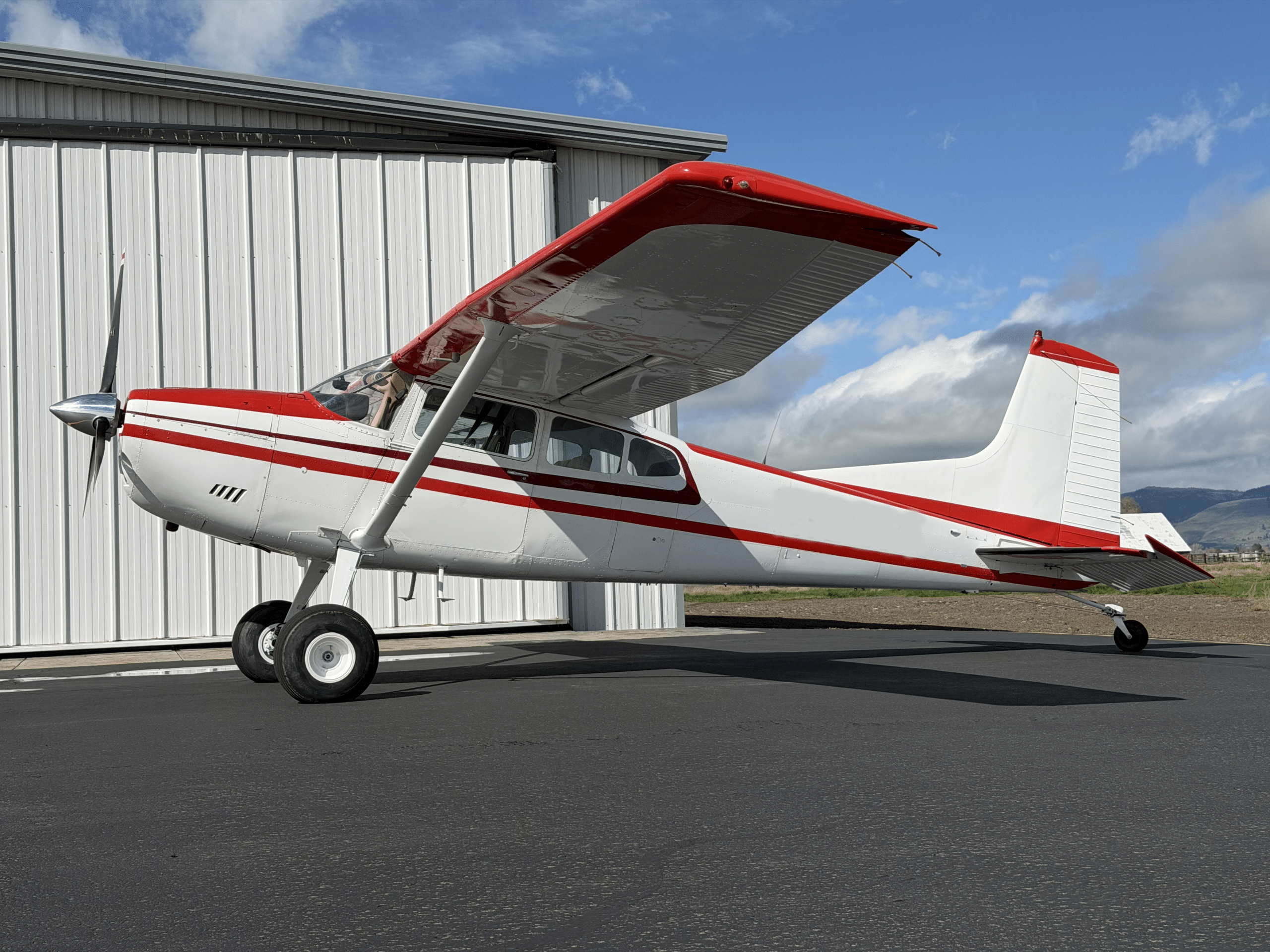
About the 1981 Cessna 180K
Cessna built the 180 for nearly three decades before ending production with the 180K in 1981, and the type remains a benchmark bushplane for good reason. The 230-horsepower Continental O-470, conventional gear, and rugged airframe give it real payload and off-airport capability, and the K model carries the highest gross weight rating of any 180 variant, making late-production airplanes like this one particularly desirable.
This airplane went to a Montana buyer looking for a proven backcountry machine rather than a modified experimental — a taildragger with decades of established parts support, a deep pool of type-specific mechanics, and a track record on gravel bars and unimproved strips across the Rockies. Clean, low-modification 180Ks with documented compression and honest logbooks continue to command strong prices.
How We Financed This Aircraft
Financing a 43-year-old taildragger comes down to documentation more than age. We worked with the lender's appraisal desk to build a value case from recent 180 and 180K sales, weighted for engine time since major overhaul, corrosion history, and any modifications such as larger tires or a STOL kit. Clean corrosion inspection records mattered here, since the 180's history in coastal and backcountry operations makes corrosion a standard underwriting question on the type.
The buyer's tailwheel time and intended backcountry use factored into the insurance quote that supported the loan. A 20% down payment reflected typical expectations for a well-maintained classic taildragger with solid comps in the current market.
On a 180, corrosion history and engine time since overhaul carry as much weight as the airframe's age.
What to Expect in the Process
A typical Cessna 180 or comparable classic-taildragger financing transaction includes:
- Pre-qualification: Establishes budget and loan structure before you start shopping for a specific airframe.
- Aircraft specification: Review of engine time since overhaul, corrosion inspection history, and any STOL or gear modifications.
- Pre-purchase inspection: A taildragger-experienced mechanic checks the airframe for corrosion, control surfaces, and gear condition.
- Title search: Standard for all transactions through the FAA Aircraft Registry.
- Insurance: Underwriters evaluate tailwheel time and intended backcountry or off-airport use.
- Closing: Funds and title transfer through escrow once inspection and insurance are finalized.
The full process is covered on our loan process page.
Questions Buyers Ask About Cessna 180 Financing
Is a 40-plus-year-old Cessna 180 harder to finance than a newer airplane? +
Age isn't the deciding factor. Lenders weigh engine time since overhaul, corrosion inspection history, and comparable sales more heavily than model year, and well-documented 180s finance readily given steady demand for the type.
Does corrosion history matter for financing a Cessna 180? +
Yes. Corrosion is a standard inspection point on this airframe given its history in coastal and backcountry operations. Clean corrosion records support a stronger appraisal and smoother underwriting.
How much down payment is typical for a Cessna 180? +
Most transactions in this category see 15-20% down, with well-documented, low-modification airframes tending toward the lower end of that range.
Does tailwheel experience affect loan approval on a 180? +
Indirectly, yes. Insurance underwriters weigh tailwheel time heavily on this type, and binding coverage is a condition of closing. Logged tailwheel and backcountry time typically smooths that process.
Do STOL kits or larger tires change how the aircraft is valued? +
They can add value when properly documented with STC paperwork and updated weight and balance records. Undocumented modifications may not be credited during appraisal.
What loan terms are available for aircraft in this price range? +
Terms of 15-20 years are common for certified piston aircraft in the $150,000-$250,000 range, depending on aircraft age, buyer credit profile, and down payment.
Related Resources