
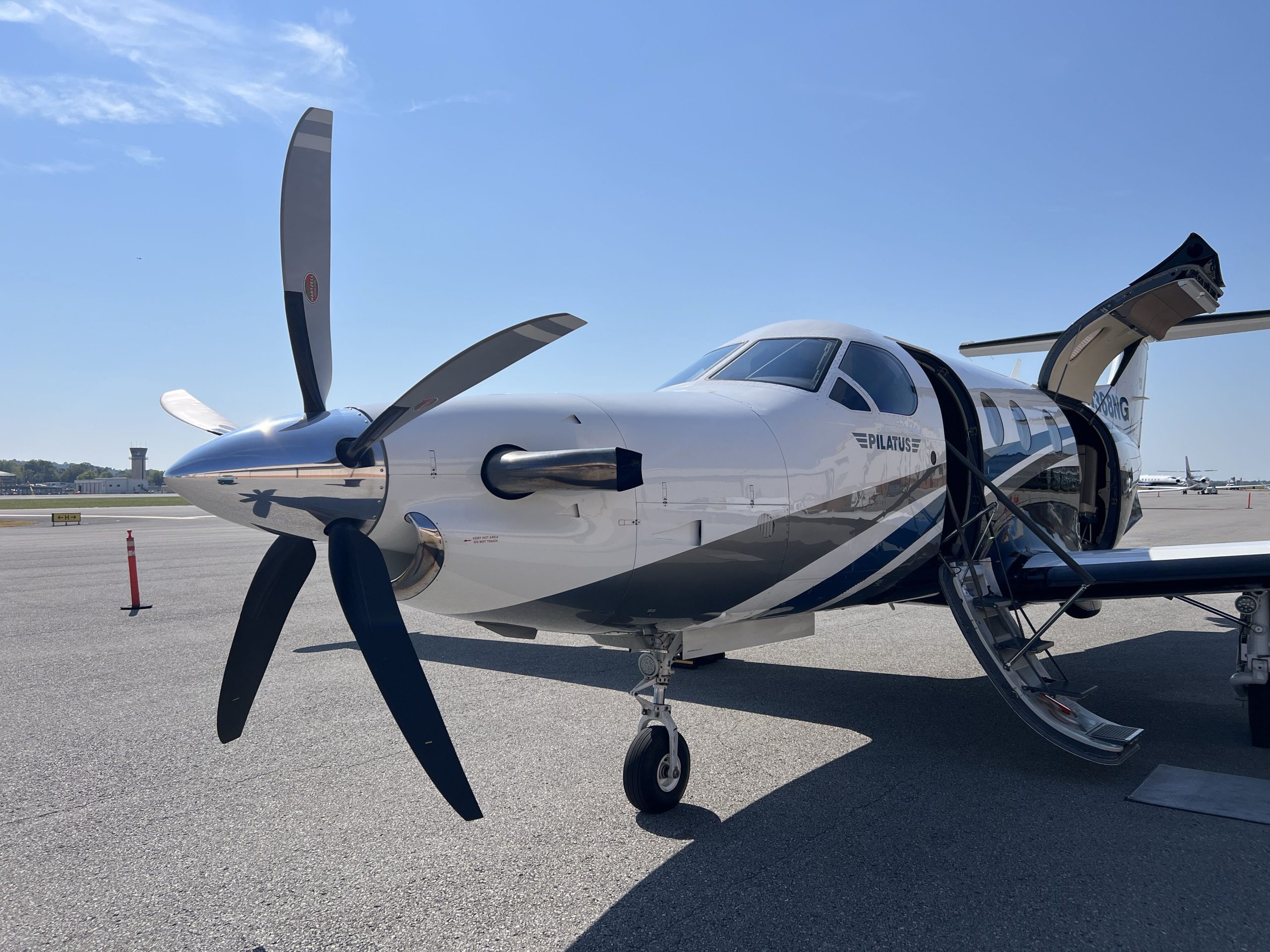
 Credit: Tripp Thurston
It was the summer of 1927, and Charles Lindbergh had successfully flown the Spirit of St. Louis on a solo non-stop transatlantic flight from New York to Paris that May. The country was abuzz with possibility, and the formerly impoverished immigrant family of Meyer Guggenheim had gone below AGL 0 to build a mining fortune that his family would carry into the skies.
The Guggenheim Tour of 1927 took Charles Lindbergh on a celebratory and promotional flying tour across the United States, visiting 48 states in the promotion of aviation. On August 15, 1927, Charles Lindbergh arrived in Chicago in what would become the origin story for FLYING. This piece is about how one pilot created a magazine that would grow into more than a dozen recognized aviation brands and include marketplaces, intelligent resources and an aircraft finance brokerage to serve readers in ever changing ways.
William Ziff was a World War I aviator who, following the war, started an advertising agency for African American newspapers, based in Chicago. By the time Charles Lindbergh arrived that summer, Ziff had freshly entered the publishing world directly, with a magazine called American Humor. While the hobby magazines and comic books would follow in later decades well after the Roaring Twenties, Ziff followed the momentum surrounding Lindbergh and the Spirit of St. Louis with an initial issue of Popular Aviation (now FLYING Magazine) that same month.
From that point on, FLYING would become the most widely read aviation magazine, covering the rise of Cessna, the advancements during World War II, the golden age of aviation, the space race, and so many makes and models since. FLYING’s issues have included notable editors like military aviator and poet Gill Robb Wilson, J. Mac McClellan and Richard L. Collins. The content that has inspired millions of readers over the years came to FLYING in part from a roster of well-loved contributors like Martha Lunken, Len Morgan, Gordon Baxter and Peter Garrison, who served at one point as an associate editor.
While ownership of the publication eventually changed hands from Ziff Davis, and even left the United States for a time, FLYING continued its role as a central figure in the aviation community, a partner of trade associations, and a conduit for the next generation of technologies to reach its avid audience.
In 2021, ownership returned to America in a major way. From Ziff’s first issue, which said “the air is free — no rails — no streets”, FLYING was meant to be aspirational and evoke the imagination of pilots and those who dream beyond the confines of today. It reminds me of a parallel explanation from a captain describing his vessel, popularized on the silver screen in the Curse of the Black Pearl, that “It’s not just a keel and a hull and a deck and sails, that’s what a ship needs. What a ship is… is freedom.” For those who live to rotate off the runway, everything from the prop to the elevator, every component of a spec sheet, is how we access the freedom found at FL050, FL100 and FL510.
That freedom and the way we interact with it have changed over the decades. While six packs still have their place in aviation, new advancements in glass cockpits, including the recent announcements for the Garmin Axis and Airhart Avionics, are changing the narrative, aircraft like the Pilatus PC-12 and Cessna Caravan are ever expanding versatility, and even the backcountry has a turbine now, thanks to the Cubcrafters Carbon Cub ULT. Powerplant technology continues to evolve, and the ownership implications are improving as gains in fuel efficiency lower direct operating costs and manufacturers like Lycoming extend TBO thresholds. Adding in Autoland safe return becoming standard on many models, and the kind of space in a cabin that means my six-foot-four-inch frame doesn’t need a yoga lesson to reach the cockpit, and the premiumization of aircraft is moving ahead as fast as any other aspect. Even my own local airport (KFGU) is stepping up its game, recently adding a Jet-A fuel truck and approving a new PAPI lighting system.
These changes in how we physically interact in aviation are echoed in how our audience finds and interacts with aviation content. Editors like FLYING Editor-in-Chief Jessica Ambats, Plane + Pilot Editor-in-Chief Cayla McLeod and AvBuyer Commissioning Editor Matt Harris all face this challenge of evolving content and meeting readers where they are, whether that is in print, in digital editorials and video, through both virtual and live experiences, or at the transaction level. For most pilots, whether first-time aircraft buyers or those with decades of time spent in their hangar, buying an aircraft is an infrequent event. The advancements in aircraft mean that those who bought an aircraft last decade are met with new aircraft comparisons and new buying and ownership considerations this time around.
AvBuyer already had the model — a respected marketplace matched with leading editorial intelligence providing the type of environment where an avid buyer becomes a well-informed owner. Firecrown Media added Aircraft for Sale to answer the same need in the owner-flown market, including high-performance pistons, MOSAIC-ready aircraft and experimental planes. But the owner flown market faces a different set of realities when it comes to actually transacting on aircraft, most notably perhaps in financing.
Aircraft lending is one of those areas that underwrite just like any personal or commercial loan until you reach the other half of the underwriting: the collateral analysis. Banks, which underwrite both the ability to make payments and the value of the aircraft, generally follow one or more of these three options.
The bank or credit union is willing and able to figure out an aircraft loan on a one-off for a particular client on a legacy aircraft make and model. This is usually inefficient, and as a career banker, it is never fun to explain a one-off to a bank regulator.
The second option is to acknowledge the nuances of collateral that flies with parts that time out and a title company hundreds of miles away in Oklahoma, and specialize in aviation lending. Dedicating bankers and staff to specialized lending teams means the bank believes there will be enough business to make the investment in people and technology worth it, or that there is a competitive disadvantage if the bank does not staff the team. This competitive analysis most directly impacts the ultra-high-net-worth clients found in private banking groups, or middle-market and corporate business clients, both of which tend toward the turboprop and jet markets. This, and the efficiency that comes in making fewer, larger loans, is why so many regional and national banks have minimum thresholds for aircraft lending, usually starting around $3-5 million.
The third option is to stick with what you know, and just say no.
While bankers struggle with “No” more than it may seem, banks and credit unions do have to evaluate these options and make a choice. It is exactly this choice that makes finding the right financing resource a black hole in aviation. Does my bank do aircraft financing? Does my mission or my aircraft fit what they are willing to lend on? Does my bank do this often enough to understand the value of logbooks, why we speak in hours, not years, and does my bank have the relationships established to keep this lending experience from becoming as bumpy as a new pilot’s first landing?
In July 2023, the ownership behind FLYING and AvBuyer acquired a Las Vegas-based aircraft financing brokerage called Sky Allies Capital. Aptly based in the city that also holds NBAA-BACE each autumn, the company was rebranded FLYING Finance and expanded to support what is actually in our readers’ hangars: experimentals, light sport aircraft, high-performance pistons, turboprops and jets. The narrow version of why was that FLYING Finance could increase liquidity in the fragmented private aviation marketplace. The truer version is that FLYING’s readers were changing how they found aircraft, how they researched them, and how they bought them, and financing needed to change with them.
Fast forward to today and FLYING Finance has helped hundreds of pilots secure financing for sixty-year-old Piper Cherokees, three-year-old Piper M350s, brand-new Cirrus SR22Ts and more Cessna 182 aircraft than any other make and model. FLYING Finance understands the Alaskan backcountry and the density altitude of southern summers, and has financed aircraft in 44 of the 50 states. FLYING Finance has earned the trust of brands reshaping the marketplace with MOSAIC-ready aircraft, including Bristell, Sling Aircraft and Tecnam, as their official financing partner. The stories behind those numbers are the same ones that fill FLYING’s pages every month: pilots chasing an aspiration, working through a decision, and letting FLYING be part of how they get there.
“The air is free — no rails — no streets.” Holding onto that kind of freedom means aviation has to stay honest, transparent and accessible for this generation of pilots, and the next one behind them. That’s the bar FLYING Finance has been building toward this year: a fuller library of tools and guides on aviation financing, one of the largest free databases for aircraft comparison anywhere, live rates and the Federal Reserve benchmarks behind them posted in the open instead of locked behind a phone call, and real deal counts broken out by state and by aircraft segment so a buyer can see the market instead of taking our word for it. FLYING Finance’s Market Coverage now walks through all three major segments, backed by the order backlogs of the manufacturers building these aircraft.
More is coming from FLYING. But no amount of it changes the actual job: being there for the reader in front of us, whether that’s a first-time buyer or a pilot trading a piston for a turbine.
Ziff didn’t set out in 1927 to build a financing company — he set out to build a magazine that promoted innovation in aviation and took pilots seriously. Everything since has been the same publication finding new ways to do that: a broadening to include Plane + Pilot, KitPlanes, Aviation Consumer, Avweb, and other brands; a marketplace with intelligence from AvBuyer and Aircraft for Sale; a flight school guide when options became more varied; and for the last few years, financing, because making getting into the left seat accessible means more than passing the checkride.
Whether you just took your discovery flight or you’ve flown across the world, you’re the reason FLYING exists. If you’re curious about ownership, or you already have your next aircraft picked out, reach out — pilot to pilot — at (702) 757-1176 or flyingfinance.com.
Ready to talk financing, pilot to pilot?
Soft pull, one team, one conversation — from experimentals to turbines.
FLYING Finance is the aircraft financing division of Firecrown Media, publisher of FLYING Magazine. Rates current at flyingfinance.com/aircraft-loan-rates/.
Talk to a specialist
Every aircraft and every buyer is a little different. Tell us how to reach you and a FLYING Finance specialist will follow up to talk through your aircraft, your numbers and your timing.
Prefer to call? (702) 757-1176