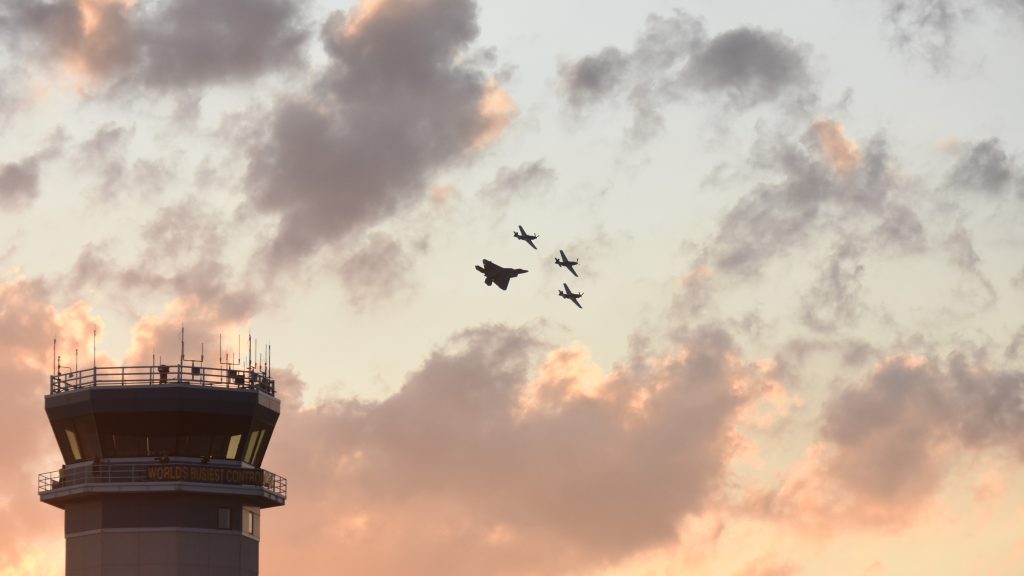
Last July I was standing at the edge of the Wittman Regional flight line watching a parade of everything from a freshly painted RV-14 to a King Air that still had its ferry permit taped to the windscreen. Two rows over, a pilot was shaking hands on a Sling TSi he’d walked up to thirty minutes earlier.
He didn’t have financing arranged. The seller had three other buyers who did.
That’s Oshkosh. The show where decisions happen in real time, on grass, between strangers who are suddenly principals on a $300,000 transaction. And the show where the buyers who close are almost always the ones who came prepared.
AirVenture 2026 runs July 20–26 at Wittman Regional Airport. FLYING Finance and FLYING Magazine will be on-site at Booth 2004. If you’re going — or even thinking you might buy something while you’re there — here’s what I’d tell you before you land.
The single biggest mistake I see buyers make at Oshkosh is showing up without financing in place. Not because the deals are better than everywhere else — though they sometimes are — but because the timeline is compressed in a way that rewards preparation and punishes hesitation.
Most aircraft transactions take months: searching, vetting, pre-buy, negotiation, closing. At Oshkosh, that timeline can collapse to an afternoon. A seller with three serious buyers will not wait for you to call your bank on Monday.
A pre-approval from FLYING Finance is a soft credit pull — no impact to your credit score — that establishes your loan amount, rate category, and monthly payment before you set foot on the flight line. It locks your rate for 30 days and gives you 90 days to identify and close on an aircraft. You arrive at Wittman knowing your number. When the Sling TSi comes up and the seller wants an answer, you have one.
Start at flyingfinance.com/airventure-financing/. The application takes about 3 minutes.
Rates are live — they move with Federal Reserve treasury yields, and I’d rather point you to the source than print a number that might shift by the time you read this. Current rates are always at flyingfinance.com/aircraft-loan-rates/.
What I can tell you directionally: certified piston aircraft (Cirrus, Cessna, Piper, Diamond, Mooney) are in the mid-6% range. Turboprops and single-engine jets are slightly below that. Light jets are lower still. S-LSA and MOSAIC aircraft are coming in just under 7%, and experimental/EAB aircraft are in the mid-7% range.
Fifteen percent minimum down. Twenty-year maximum amortization. Soft pull to start, no hard pull until you’re ready to close.
MOSAIC Takes Effect July 24 The Tuesday of Oshkosh week — July 24 — marks the effective date of new FAA MOSAIC aircraft certification provisions that was the big announcement we heard at last year’s EAA Airventure. This is the biggest change to the light sport category since its creation.
What changes: retractable gear is now permitted in S-LSA. Night flight is allowed with an endorsement. The old 1,320-pound weight limit is replaced by a stall-speed based framework. Aircraft like the Bristell RG MOSAIC — which previously occupied an ambiguous certification zone — now have clear S-LSA standing.
For buyers at the show, this matters on the financing side because S-LSA rates are lower than EAB rates. If you’re looking at a retractable-gear light sport and a seller quotes you an experimental rate, ask whether the aircraft has been certificated under MOSAIC. The rate and term can differ meaningfully.
The camping and homebuilt areas at Oshkosh are where the private party EAB deals happen. A pilot who flew in to display their aircraft might leave having sold it to someone who taxied up that morning.
EAB aircraft are financeable. The key document is the build log — a complete, organized build history is the equivalent of a title chain for a certified aircraft. Lenders want to see it, and sellers who have it close faster. Bring your documentation if you’re displaying, and ask for it if you’re buying.
If you’re buying a business aircraft at Oshkosh this year, there’s a meaningful tax dimension to the timing. The OBBBA permanently restored 100% first-year bonus depreciation for business aircraft, and the placed-in-service deadline is December 31, 2026.
An aircraft purchased at Oshkosh in late July gives you five months to close, complete any avionics work, and place the aircraft in service before the deadline. On a $1.3M Piper M350 at a 37% tax rate, that’s $481,000 in year-one savings. On a $3M TBM, it’s over $1.1M. The math is real. The Oshkosh entry point is one of the most favorable of the year.
Consult your aviation CPA on the specifics of your situation. FLYING Finance can refer you to trusted aviation tax advisors if you need one.
FLYING Finance will be at AirVenture 2026 with FLYING Magazine at Booth 2004, July 20–26. Stop by and we’ll run the numbers on anything on the flight line.
Pre-approval starts at flyingfinance.com/airventure-financing/. Kimsey Bell (Director of Finance) is at 423.402.8982 and Jackson Moore (Aviation Finance Specialist) is at 615.263.9828 if you want to talk before the show.
Tripp Thurston is CFO and Group President of Firecrown Media, publisher of FLYING Magazine, AVweb, AvBuyer, AircraftForSale.com, and Kitplanes. FLYING Finance is Firecrown’s aircraft financing brokerage.
Rates are updated live based on Federal Reserve treasury yield movements. See flyingfinance.com/aircraft-loan-rates/ for current rates.
Talk to a specialist
Every aircraft and every buyer is a little different. Tell us how to reach you and a FLYING Finance specialist will follow up to talk through your aircraft, your numbers and your timing.
Prefer to call? (702) 757-1176