
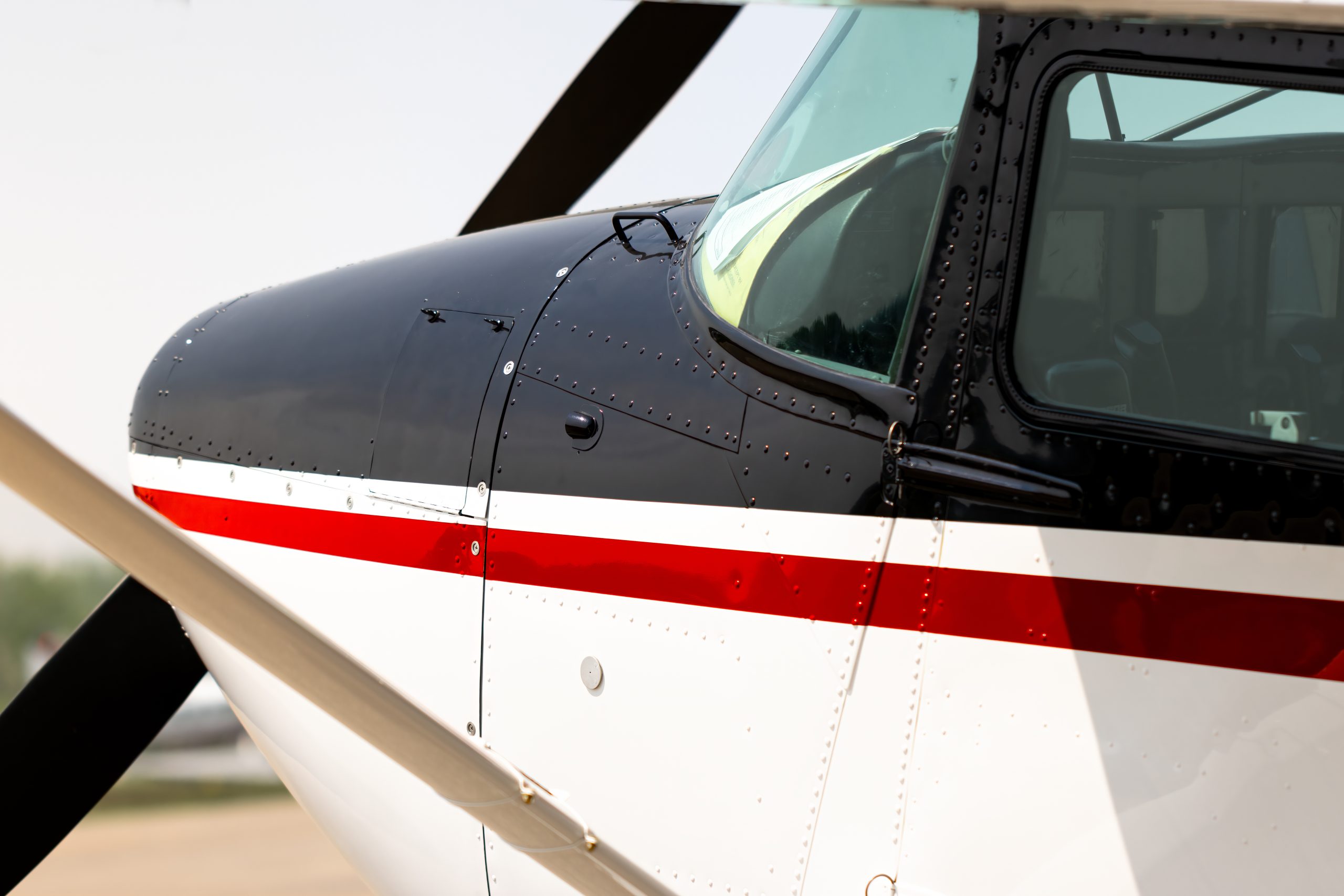
The six-seat load-hauler of the Cessna line. Full factory specs, an honest owner's-eye review, and what it takes to finance one.
| Engine | Lycoming TIO-540-AJ1A (turbocharged) |
|---|---|
| Horsepower | 310 hp |
| Seats | 6 |
| Max cruise speed | ~161–163 ktas (up high) |
| Max range | ~630–700 nm (config-dependent) |
| Useful load | up to ~1,450 lb (HD) |
| Max takeoff weight | 3,789 lb (HD) |
| Usable fuel | 88 gal |
| Service ceiling | 27,000 ft |
| Takeoff / landing ground roll | ~910 ft / ~735 ft |
| Dimensions (span / length / height) | 36 ft / 28 ft 4 in / 9 ft 4 in |
| Typical price | Used ~$300k–$650k · New (HD) ~$900k+ |
Earlier T206H (pre-HD): ~1,255 lb useful load at 3,600 lb MTOW. Naturally aspirated 206H (built through 2013): Lycoming IO-540-AC1A5, 300 hp. Figures are manufacturer/type data and vary by year and equipment.
The Stationair is the airplane load-limited Cessna owners eventually eye. Plane & Pilot calls it a backcountry stalwart that evolved from the 182 — defined by its big rear-loading doors, large useful load, and respectable cross-country legs, equally at home as a family transport with a backcountry attitude or a backcountry air taxi. Aviation Consumer's used-aircraft guide frames it as a natural step up the Cessna ladder — an easy transition for Skyhawk and Skylane pilots with the right training, and stable enough for serious IFR work.
The current Turbo Stationair HD runs a 310-hp turbocharged Lycoming TIO-540. In Plane & Pilot's flight testing the airplane trues about 145 knots at 8,000 feet and near 160 at 16,000, topping out around 163 knots up at 20,000 feet in exchange for roughly 19 gph. The turbo holds power well into the high teens — Plane & Pilot memorably flew one in the flight levels over the Sierra Nevada — though the wings still give up climb up high (about 1,000 fpm at sea level, closer to 800 at 10,000). Plan your trips around the mid-140s to low-150s and you'll never be disappointed.
That useful load is genuinely big, but it's a menu, not a buffet. As Plane & Pilot notes, like most utility airplanes you trade fuel pounds for paying pounds almost at will — drop to 50 gallons (two hours plus reserve) and cabin payload climbs toward 900 pounds; pull the middle and aft seats and a working Stationair approaches 1,000 pounds of cargo. Fill all six seats, top the tanks, and load bags, though, and you'll run out of weight before you run out of room. It's a hauler or a long-legged cruiser on any given leg — rarely both.
In the air it's docile and stable; on the runway it rewards discipline — Aviation Consumer is candid that heavy Cessna singles are unforgiving of mismanagement, and speed control on final matters. The payoff is that cabin: the high wing and big aft clamshell doors make loading bulky cargo easy — Aviation Consumer notes owners who haul everything from cargo pods to motorcycles. Just mind your loading; it's an airplane that wants a real weight-and-balance, not a guess.
None of this is cheap to feed — budget for the fuel burn and, on the turbo, for top-end and turbocharger maintenance over time. The offset is familiarity: Aviation Consumer's point that just about any competent shop can wrench a 206 is a real ownership saving. New Turbo Stationair HDs run north of $900k; clean used H-models land roughly $300k–$650k depending on year, avionics, and turbo. However you land on price, the 206 finances cleanly as a certified single — a well-understood collateral profile for lenders, terms up to 20 years, and as little as 15% down.
Used H-model or new Turbo Stationair HD, lenders know this airframe cold. Get a real number before you shop, so you're negotiating from strength.
| Cessna 206 | Cessna 182 | Cessna 210 | Beech Bonanza | |
|---|---|---|---|---|
| Seats | 6 | 4 | 6 | 4–6 |
| Cruise | ~145–160 kt | ~140 kt | ~170 kt | ~170 kt |
| Gear | Fixed | Fixed | Retractable | Retractable |
| Best at | Hauling / backcountry | All-round value | Speed + load | Speed + ramp appeal |
| Buy it if… | You carry people & stuff | You rarely fill the back | You want 206 room, faster | Speed matters most |
Against a 182 Skylane, the 206 hauls appreciably more and adds the cargo doors — but burns more and costs more to buy and feed; if you rarely fill the back, a Skylane is the smarter money. Against a Bonanza, the 206 gives up speed and ramp polish but wins on cabin, utility, and fixed-gear simplicity. And against a used 210, the Stationair trades retractable-gear speed for lower complexity and maintenance.
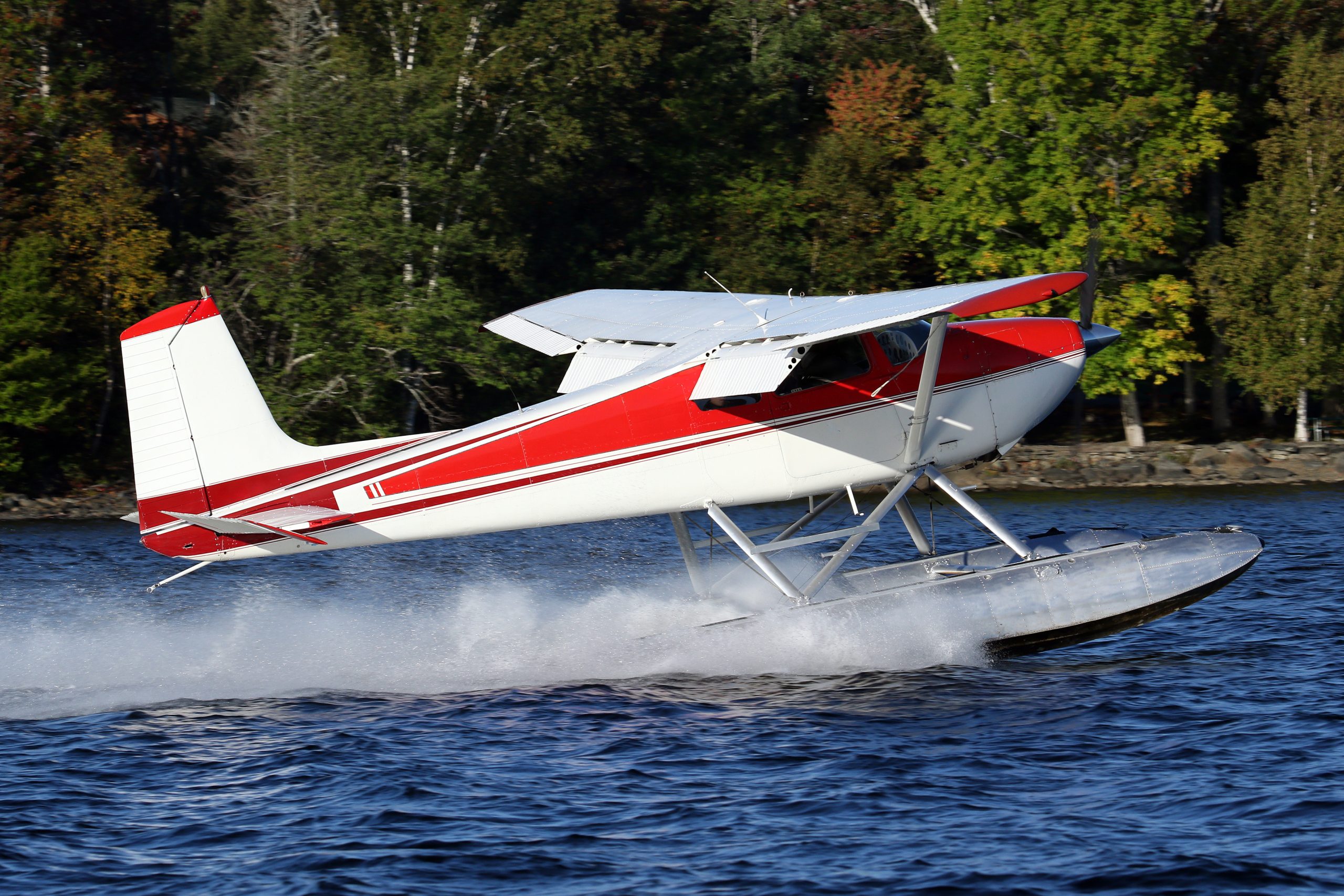
Used T206H Stationairs typically run about $300,000–$650,000 depending on year, avionics, and whether they're turbocharged; a new Turbo Stationair HD lists north of $900,000. Estimate a monthly payment here.
The Turbo Stationair HD trues roughly 145 knots down low and near 160–163 knots up in the mid-to-high teens. The naturally aspirated model is a little slower and loses more at altitude.
Up to about 1,450 pounds on the current HD (3,789-lb max takeoff weight); earlier T206H models carry around 1,255 pounds. You can't fill all six seats, full fuel, and baggage at once — it's a fuel-versus-payload trade.
The turbo earns its keep for high-density-altitude, mountain, and float operations where the naturally aspirated engine loses power. For low-altitude hauling, the simpler naturally aspirated 206H saves on maintenance.
Yes — the 206 finances as a certified single, with terms up to 20 years and as little as 15% down. See your rate in four questions.
Sources: Plane & Pilot, Cessna's All-New Stationair, Escalade for the Jeep Trail and Cessna 206 Stationair; Aviation Consumer, Cessna HD T206H: Turbocharged Utility and Cessna 206 Stationair used-aircraft guide. Specifications from manufacturer/type data.
Talk to a specialist
Every aircraft and every buyer is a little different. Tell us how to reach you and a FLYING Finance specialist will follow up to talk through your aircraft, your numbers and your timing.
Prefer to call? (702) 757-1176