The 2026 Buyer's Guide:
Flight School Fleet Optimization
By the Leadership at Flying Finance.
The flight training industry is standing at the precipice of a generational shift. For decades, the math of running a flight school was simple, if not entirely easy: acquire legacy airframes, maintain them diligently, and pass the predictable operating costs down to the student. Today, that equation is fundamentally broken. As we look toward 2026, flight school owners and Chief Flight Instructors are caught in a perfect storm.
The acquisition cost of a standard 1970s-era trainer has skyrocketed. The impending phase-out of 100LL avgas threatens the viability of aging engine fleets. Simultaneously, a severe shortage of A&P mechanics means that every hour an aircraft sits on the ground waiting for legacy parts is an hour of lost revenue and delayed student progress.
“Innovation in aviation only survives if it can be commercialized and operated profitably.”
We wrote this guide because we recognize that the survival and growth of the general aviation (GA) community depend on how we navigate this exact moment. At Flying Finance, we are more than capital providers; we are stakeholders in this ecosystem. We need flight schools to thrive. We need student pilots to have access to modern, safe, and financially accessible training. And crucially, we need to support the Original Equipment Manufacturers (OEMs) who are pouring capital into innovation-those building the FADEC-equipped, composite, and Next-Gen Light Sport Aircraft that represent the future of flight.
The upcoming FAA MOSAIC regulations will redefine what is legally and operationally possible in primary flight training. The aircraft evaluated in this whitepaper-from the domestic ruggedness of Van’s and Vashon to the European efficiency of Tecnam, Bristell, and Pipistrel, alongside the proven legacy mainstays-represent the tools required to adapt to this new reality.
This buyer’s guide is our contribution to that effort. By ruthlessly analyzing the Direct Operating Costs, acquisition realities, and fleet architectures of 2026, our goal is to help flight schools protect their profit margins, empower OEMs to keep pushing boundaries, and ensure the skies remain open and busy for the next generation of aviators. The transition to the Next-Gen fleet isn’t just a regulatory requirement or an environmental necessity; it is a financial imperative. We are here to help you capitalize on it.
Table of Contents
Preface: Our Commitment to General Aviation
Section 1: Executive Summary
The general aviation training industry has reached an inflection point. In 2026, the traditional financial model of relying exclusively on legacy airframes for primary flight training is no longer sustainable. Skyrocketing acquisition costs, a severe shortage of aviation mechanics, and the looming 2030 phase-out of 100LL aviation fuel have fundamentally altered the Direct Operating Cost (DOC) equation for flight schools.
This buyer’s guide provides a comprehensive roadmap for navigating this transition through strategic fleet optimization. Ultimately, innovation in aviation only survives if it can be financed. Delaying fleet optimization leaves thousands of dollars on the table every month. This guide provides the operational data and financing strategies required to scale your flight school profitably into the next decade.
Key Findings
- The MOSAIC Catalyst: The FAA’s MOSAIC regulations eliminate the 1,320 lb LSA weight limit, allowing Next-Gen trainers to offer full-fuel, two-adult utility for primary training.
- The Economics of Disruption: European and Domestic disruptors powered by FADEC Rotax engines perform the primary training mission at roughly half the fuel cost of legacy heavyweights.
The Unleaded Imperative: Modern Rotax engines natively thrive on unleaded auto gas (Mogas) or UL94, immediately insulating operators from the 2030 100LL phase-out risks.
Mixed-Fleet Architecture: Total optimization requires utilizing highly efficient Next-Gen or electric aircraft for pattern work, while reserving premium assets strictly for advanced IFR training.
Capitalizing on the Tax Code: 2026 IRS tax advantages-including the $2,560,000 Section 179 deduction limit and 100% Bonus Depreciation-turn financed Next-Gen aircraft into tax-advantaged revenue generators.
Section 2: The Macro-Environment
Forces shaping the fleet.
For the last three decades, flight school fleet strategy was largely static. In 2026, operating a flight school requires navigating three converging, industry-altering forces. Understanding these regulatory and economic shifts is no longer optional; it is the baseline for survival.
2.1 The MOSAIC Era Takes Effect
The FAA’s Modernization of Special Airworthiness Certificates (MOSAIC) rule is the most significant regulatory change to general aviation in twenty years. While expanded Sport Pilot privileges went into effect in late 2025, the critical changes for flight school operators center around the new 14 CFR Part 22 manufacturing standards, which take full effect on July 24, 2026.
Historically, Light Sport Aircraft (LSAs) were handcuffed by an arbitrary maximum takeoff weight of 1,320 lbs. This made them financially risky for primary training; putting a 220-pound instructor and a 200-pound student in the cabin often meant legally carrying less than two hours of fuel. MOSAIC eliminates that 1,320 lb cap. Instead, the FAA has adopted a performance-based standard, capping the clean stall speed (Vs0) at 61 knots CAS. This allows OEMs to build much heavier, more robust airframes with vastly improved useful loads, retractable gear, and variable-pitch propellers, while still certifying them under industry consensus standards rather than the prohibitively expensive Part 23 standard. For flight schools, July 2026 marks the moment Next-Gen LSAs transition from “niche recreational planes” to capable, primary flight training workhorses.
What is Part 22? Taking effect in July 2026, 14 CFR Part 22 is the new FAA regulation covering the Design, Production, and Airworthiness Requirements for Non-Type Certificated Aircraft. It is the legal framework that allows the robust Next-Gen trainers to operate with higher weights and expanded capabilities under the MOSAIC rule.
2.2 The 100LL Phase-Out and the Unleaded Reality
Following the EPA’s endangerment finding on lead emissions, the FAA’s Unleaded Avgas Transition Plan has firmly targeted the end of 2030 for the complete phase-out of 100LL at mainland U.S. airports. While replacement fuels like GAMI’s G100UL and Swift Fuels’ 100R are actively rolling out, the transition is fraught with hidden costs for legacy fleet operators. Operating legacy Lycoming and Continental engines on these new high-octane unleaded fuels often requires purchasing Supplemental Type Certificates (STCs) and, in some cases, replacing older nitrile O-rings and fuel tank sealants to prevent degradation.
Conversely, the Next-Gen trainers evaluated in this guide are overwhelmingly powered by modern, FADEC-controlled Rotax engines (such as the 912iS). These powerplants were designed natively for unleaded fuels. They can burn 100LL if necessary, but they thrive on cheaper, widely available UL94 or premium unleaded auto gas (Mogas). This insulates the flight school from the impending 100LL supply chain shocks and immediately reduces the largest variable cost in their operation: fuel.
“A modern flight school cannot build a 10-year financial model reliant on a fuel source the federal government has officially slated for elimination.”
2.3 The Maintenance Bottleneck
Acquisition cost and fuel burn are only part of the Direct Operating Cost (DOC) equation; aircraft availability is the ultimate metric of a profitable flight school. In 2026, the aviation industry is facing a severe labor crisis. According to the latest ATEC/Oliver Wyman pipeline reports, North America is facing a shortage of roughly 24,000 aviation mechanics, with the average age of a certificated A&P currently sitting at 54.
This macroeconomic reality directly impacts fleet strategy. Operating a fleet of 1970s-era Cessna 150s or 172s requires frequent, labor-intensive maintenance. When mechanics are scarce, their hourly rates skyrocket, and the time an aircraft spends in the shop (AOG – Aircraft on Ground) increases drastically. Optimizing a fleet in 2026 requires acquiring new airframes backed by comprehensive OEM warranties, reliable domestic parts networks, and modern, computer-diagnostic engines that require less intensive preventative wrenching.
Section 3: The Contenders
Defining the Next-Gen Fleet
To successfully navigate the 2026 macro-environment, flight schools must deploy assets that drastically reduce variable costs while surviving the high-cycle rigors of primary training. The days of a “one-size-fits-all” fleet are over. Profitability now requires precision.
In this section, we evaluate the leading Next-Gen and Part 22 aircraft-ranging from European efficiency models to rugged domestic tailwheel trainers-against the proven legacy mainstays. Our analysis focuses on three critical pillars for flight school operators:
Acquisition Viability: The initial capital required and the financing structures available through FLYING Finance.
Direct Operating Costs (DOC): Real-world fuel burn, engine reserve requirements, and preventative maintenance schedules.
Ramp Appeal & Utility: Student ergonomics, avionics parity with advanced trainers, and dispatch reliability.
The aircraft evaluated on the following pages represent the definitive tools required to build a resilient, high-margin flight school in the MOSAIC era.
3.1 The Legacy Heavyweights
The Unshakable Standard vs. The Economic Reality
Models: Cessna 172S Skyhawk, Piper Archer TX
Estimated 2026 Acquisition Cost: $450,000 – $500,000
Powerplant: Lycoming IO-360/O-360 (180hp)
TBO: 2,000 Hours
Estimated Fuel Burn: 8.5-10.0 GPH
Avionics Standard: Garmin G1000 NXi
For over half a century, the Cessna 172 and Piper PA-28 series have been the undisputed kings of the training ramp. In 2026, the Cessna 172S and Piper Archer TX remain incredibly capable, familiar, and durable machines. However, as the flight training industry is squeezed by rising costs and mechanic shortages, the financial justification for using a half-million-dollar asset for ab initio (primary) flight training is rapidly deteriorating.
The Weight and Payload Reality
One of the primary historical advantages of the legacy heavyweights has been their payload capacity. Both the modern Cessna 172S and the Piper Archer TX boast a maximum takeoff weight (MTOW) of roughly 2,550 lbs, yielding a useful load of approximately 860 to 880 lbs. This allows a flight school to pair two full-sized adults (a 220 lb instructor and a 200 lb student) while still legally carrying roughly 50 gallons of fuel (300 lbs) and a flight bag.
Before the FAA’S MOSAIC rules took effect, Light Sport Aircraft simply could not compete with these weight limits. However, with MOSAIC eliminating the 1,320 lb LSA cap, this historical advantage has been neutralized. Flight schools no longer need to pay a premium for a 2,550 lb MTOW standard category aircraft just to get a realistic, full-fuel useful load for primary training.
Maintenance and the AOG Profile
The defining operational advantage of a Cessna 172 or Piper Archer is ubiquity. Virtually every certificated A&P mechanic in the world knows how to maintain, troubleshoot, and overhaul a Lycoming O-360 or IO-360 engine. If a magneto fails or a starter needs replacing, parts are available overnight from multiple massive domestic distributors. This robust supply chain drastically reduces Aircraft on Ground (AOG) time. However, that convenience comes at a steep price. A standard 100-hour inspection on these legacy airframes is highly labor-intensive compared to modern LSA alternatives, and engine overhaul reserves for a Lycoming IO-360 must account for a $35,000 to $45,000 replacement cost at the 2,000-hour TBO mark.
The IFR Workhorse Strategy
While the Direct Operating Costs (DOC) of a Cessna 172S make it a financially inefficient choice for a student’s first 40 hours of primary training (where fuel burn and acquisition costs are paramount), it remains the ultimate instrument platform. Smart fleet operators in 2026 are transitioning their legacy heavyweights away from pattern work and reserving them exclusively for their IFR and Commercial pilot syllabuses, maximizing their G1000 NXi capabilities while limiting their total fleet footprint.
Insurance and Financing Profile
From a financing and actuarial perspective, legacy heavyweights are the safest bet in aviation. Underwriters possess over 60 years of actuarial data on the Cessna 172 and Piper Archer. They know exactly how these metal airframes behave in a hard landing and exactly what it costs to reskin a wing. Consequently, commercial insurance rates are highly predictable. Furthermore, because of their universal name recognition, these aircraft have iron-clad residual values. A flight school financing a fleet of 172s knows exactly what those assets will be worth on the secondary market five years later, making them incredibly attractive collateral for lenders.
“You are paying a massive premium for an unmatched secondary market value and a bulletproof parts network, but you are funding it with 10 gallons of expensive avgas every single hour.”
The Student and Instructor Experience
For high-time instructors building hours for the airlines, the legacy heavyweights offer total familiarity. The integration of the Garmin G1000 NXi avionics suite provides a highly transferable glass-cockpit experience that mirrors the complex systems students will eventually face in Part 121 operations. Yet, for the student pilot, the experience comes with an antiquated workload. Managing a traditional push-pull throttle and a manual mixture control is mechanically archaic compared to the FADEC systems found in modern European disruptors or automobiles.
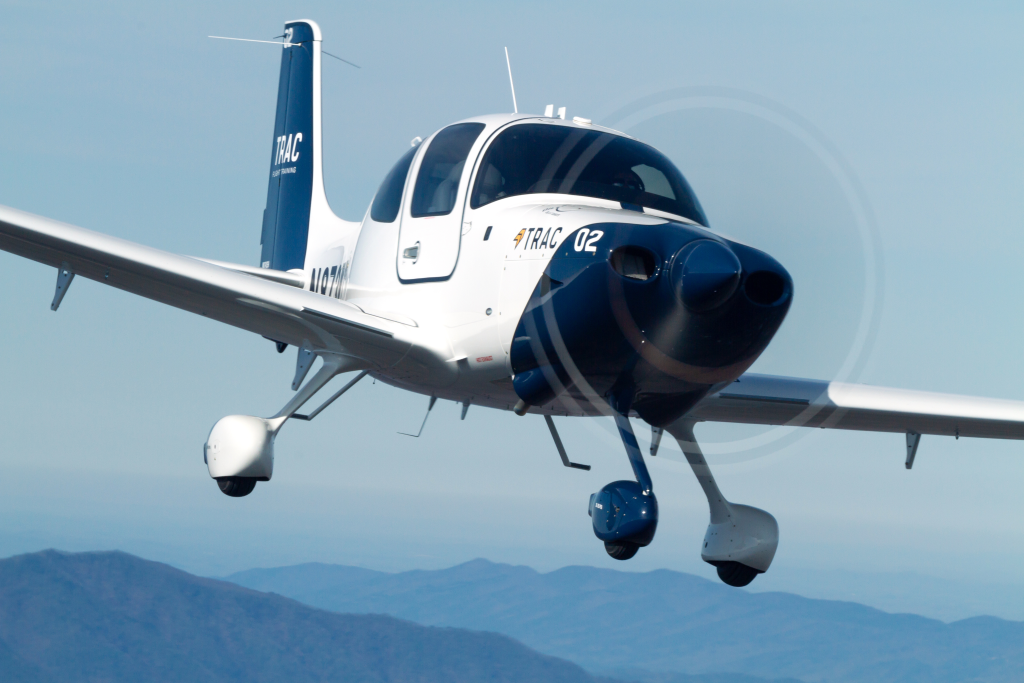
3.2 The Premium Workhorse
The Airline Pipeline and the Cost of Complexity
Model: Cirrus SR20 TRAC (G7)
Estimated 2026 Acquisition Cost: $680,000 – $730,000
Powerplant: Lycoming IO-390 (215 hp)
TBO: 2,200 Hours
Estimated Fuel Burn: 10.0-12.0 GPH
Avionics Standard: Garmin Perspective Touch+ (G7)
If the legacy heavyweights are the universal standard, the Cirrus SR20 TRAC is the undeniable luxury standard. Designed specifically for collegiate Part 141 operations and institutional flight academies, the SR20 (now in its G7 iteration) is a completely different financial and operational animal compared to the rest of the training fleet. It carries the highest acquisition cost and the highest Direct Operating Costs (DOC) in this guide, but for a specific business model, it is an absolute necessity.
The Weight and Payload Reality
Where LSA and Next-Gen trainers require careful weight management, the SR20 solves the payload problem with sheer size and horsepower. With a maximum takeoff weight (MTOW) of 3,150 lbs, the SR20 boasts a useful load exceeding 1,025 lbs. A flight school can easily put two 220-pound adults in the front seats, fill the 56-gallon tanks to the tabs, and still have weight to spare for a rear-seat observer or check airman. However, this capability comes with a brutal aerodynamic penalty for primary training. Lugging a 3,150 lb composite airframe through the traffic pattern requires a 215-horsepower Lycoming IO-390 engine constantly burning 10 to 12 gallons of 100LL per hour. Using an SR20 to teach a 15-hour student how to fly a rectangular traffic pattern is financially akin to using a luxury tour bus to teach a teenager how to parallel park.
Maintenance and the AOG Profile
Cirrus operates a massive, highly efficient network of Authorized Service Centers (ASCs), meaning parts availability is rarely the cause of prolonged Aircraft on Ground (AOG) situations. The tradeoff is the premium price tag. Beyond standard inspections and $45,000+ engine overhauls, Cirrus airframes feature life-limited parts-most notably the mandatory CAPS parachute repack and reefing line cutters. Maintaining an SR20 requires a well-capitalized maintenance reserve.
The SR20 TRAC is not an aircraft for the budget-conscious local school; it is a purpose-built, $700,000 classroom designed to funnel cadets directly into the right seat of a regional jet.
Insurance and Financing Profile
Financially, the SR20 appeals to commercial lenders when placed in institutional Part 141 programs, where guaranteed student pipelines make the high acquisition cost highly amortizable. The presence of the CAPS parachute drastically mitigates fatal hull-loss risk, keeping liability premiums manageable despite the $700,000 hull value.
The Student and Instructor Experience
The SR20 G7 dominates here. Featuring the Garmin Perspective Touch+ flight deck and single-lever power control, it drastically reduces mechanical workload. For universities building a direct-to-airline pipeline, the SR20 acts as the ultimate turbine transition trainer, forcing students to manage complex FMS automation from day one.
The Economics of the CAPS Repack
A defining feature of the Cirrus SR20 is the Cirrus Airframe Parachute System (CAPS). While it is an unparalleled safety feature, it represents a massive, fixed maintenance liability. The parachute and rocket motor must be entirely removed and repacked every 10 years. In 2026, depending on the shop rate, parts shipping (hazardous materials), and minor fiberglass repairs required during the extraction, a CAPS repack costs a flight school between $18,000 and $25,000. For fleet operators, this fixed indirect cost must be meticulously factored into the aircraft’s hourly rental rate from the day it rolls off the factory floor.
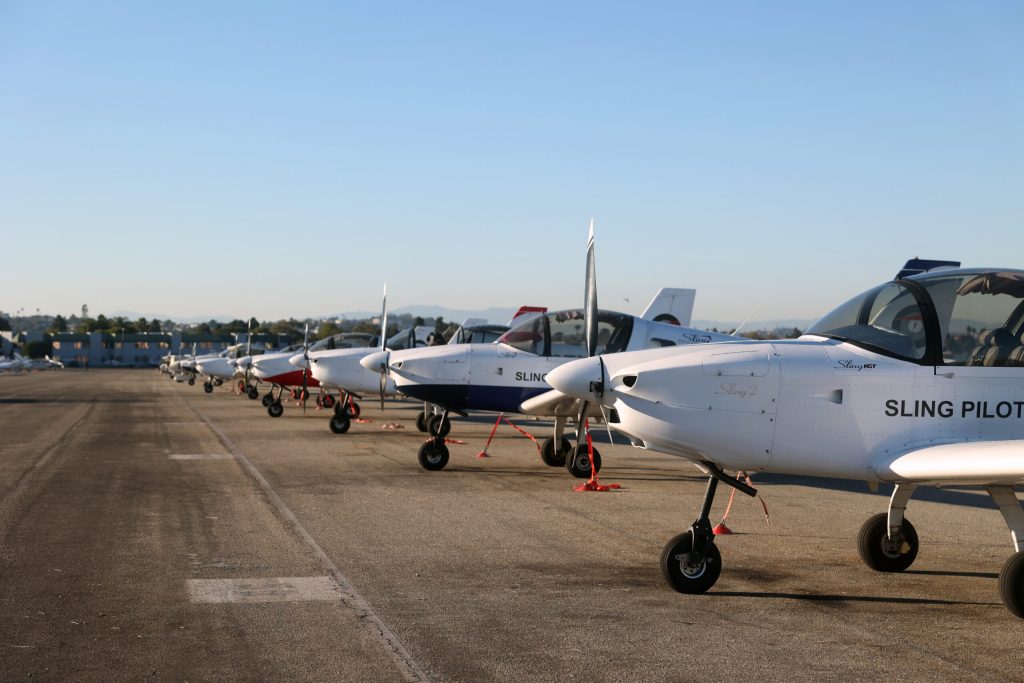
3.3 The European Disruptors
Efficiency, Modernity, and the Rotax Revolution
Models: Tecnam P-Mentor, Bristell B23, Sling LSA/HW
Estimated 2026 Acquisition Cost: $250,000 – $435,000
Powerplant: Rotax 912iSc/915iS/916iS (100 hp – 160 hp)
TBO: 2,000 Hours
Estimated Fuel Burn: 3.7-7.4 GPH
Avionics Standard: Garmin G3X Touch
The “European Disruptors” represent the fastest-growing segment of the 2026 flight school market. By leveraging advanced composite and light-alloy construction alongside ultra-efficient powerplants, brands like Tecnam, Bristell, and Sling are delivering aircraft that achieve the same mission as legacy trainers at 50% of the fuel cost. For a flight school owner, these are not just aircraft; they are “margin machines.”
The Weight and Payload Reality (The MOSAIC Shift)
Historically, European LSAs were limited by the 1,320 lb MTOW cap, often making them “single-pilot plus fuel” aircraft. In 2026, the shift to MOSAIC has transformed these contenders. The Tecnam P-Mentor and Bristell B23 are certified under CS-23/Part 23 standards with 1,587 lb (720 kg) and 1,653 lb (750 kg) MTOWs respectively, providing useful loads of 630+ lbs. The Sling High Wing takes this further, utilizing the turbocharged Rotax 916iS to manage a 2,205 lb (1,000 kg) MTOW. With MOSAIC’s 61-knot stall speed rule, these aircraft now offer “full-fuel, two-adult” utility, effectively removing the primary operational barrier that previously kept them out of heavy-use flight training.
Maintenance and the AOG Profile
The “Rotax Revolution” is the heart of this disruption. The Rotax 912iSc (found in the P-Mentor) and the 912iS (Bristell) utilize redundant electronic fuel injection (FADEC).
Maintenance: These engines require a different skill set than legacy Lycomings. Mechanics must be comfortable with liquid cooling, gearbox inspections, and laptop-based diagnostics.
Supply Chain: The primary risk factor-AOG time-has been aggressively addressed by 2026. Tecnam’s partnership with Southern Cross Aviation and Bristell’s expanded US distribution hubs mean that 90% of routine service parts are now warehoused domestically, significantly narrowing the “parts gap” that once favored Cessna and Piper.
“A flight school operating five Next-Gen disruptors instead of five legacy trainers saves approximately $300,000 in fuel costs alone over a single 2,000-hour TBO cycle. That isn’t just a saving; it’s a down payment on a sixth aircraft.”
Insurance and Financing Profile
Insurance underwriters have become significantly more comfortable with these brands as the fleet hours have mounted. The inclusion of factory-standard Ballistic Rescue Systems (BRS)-whole-airframe parachutes-in models like the Sling and P-Mentor has helped keep liability premiums competitive with legacy metal aircraft. Financially, these aircraft present a compelling “Cash Flow Positive” model. Because the acquisition cost is roughly $150k-$200k less than a new Cessna 172, the monthly debt service is lower, while the fuel savings (roughly $30/hour saved at $6.00/gal) often covers a significant portion of the loan payment.
The Student and Instructor Experience
The “Ramp Appeal” of these aircraft cannot be overstated. A student walking onto a flight line in 2026 is far more likely to be excited by the panoramic canopy and sleek lines of a Bristell or Tecnam than the 1970s-style ergonomics of a Skyhawk.
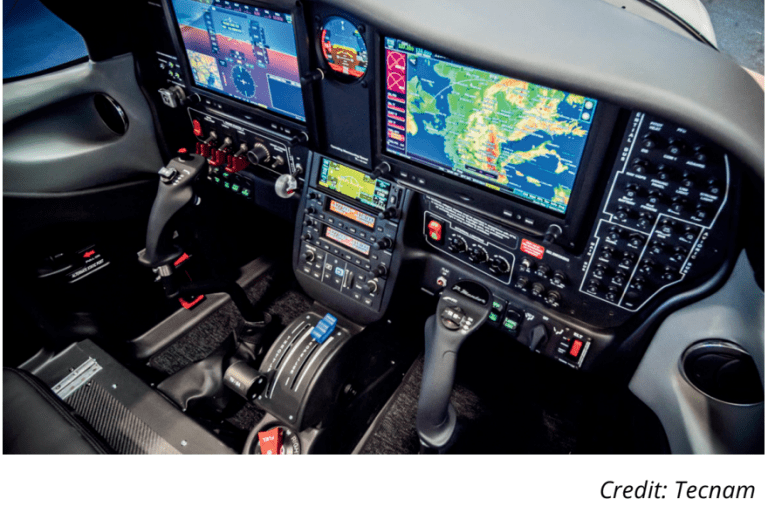
The Glass Cockpit: The Garmin G3X Touch is the standard here. It is arguably more intuitive for the “iPad generation” than the G1000 NXi, offering pinch-to-zoom maps and a cleaner interface.
Simplified Power: The FADEC system removes the mixture control and, in some models, the propeller control (Single Lever Power). This allows students to master stick-and-rudder skills faster without the distraction of engine management.
Rotax 912iS vs. 915iS – Which is for you? The 100-hp 912iS is the undisputed king of the traffic pattern; its ultra-low fuel burn (under 4 GPH at training power) makes it the most profitable engine for private pilot training. However, for schools in “High/Hot” environments (like Colorado or Arizona) or those offering advanced cross-country training, the turbocharged 141-hp 915iS (found in the Sling and Bristell Turbo) is the better choice, maintaining its sea-level performance up to 15,000 feet.
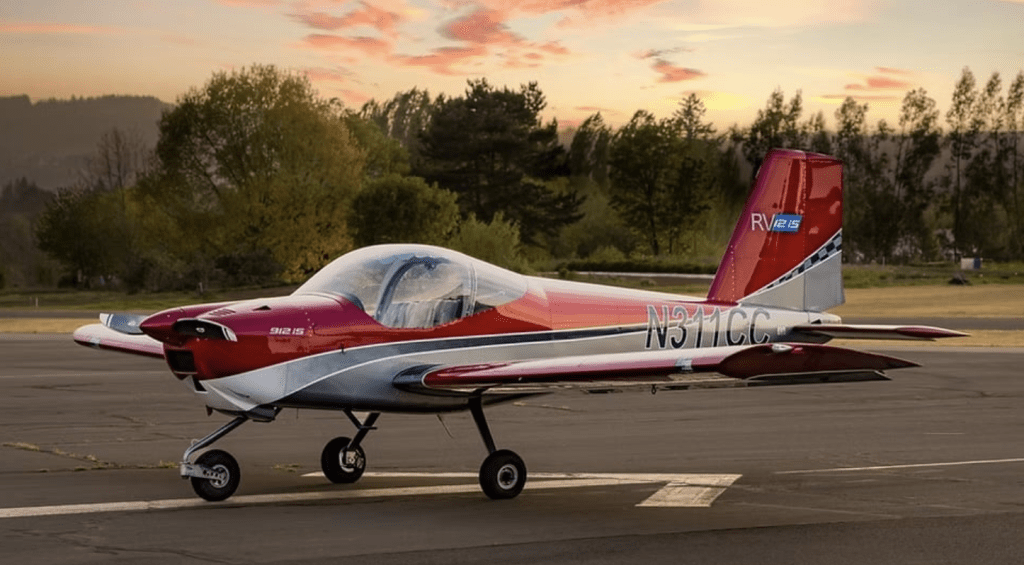
3.4 The Domestic Disruptors
American Resilience and the “Parts in Oregon” Advantage
Models: Van’s RV-12iS, Vashon Ranger R7
Estimated 2026 Acquisition Cost: $165,000 – $235,000
Powerplant: Rotax 912iS (Van’s) / Continental O-200-D (Vashon)
TBO: 2,000 Hours
Estimated Fuel Burn: 4.0 – 6.0 GPH
Avionics Standard: Garmin G3X Touch (Van’s) / Dynon SkyView HDX (Vashon)
While European imports offer undeniable flair and efficiency, a growing contingent of North American flight schools is turning toward “Domestic Disruptors.” For these operators, fleet optimization isn’t just about fuel burn; it’s about eliminating the logistical friction of international supply chains. Brands like Van’s Aircraft and Vashon Aircraft provide a powerful value proposition: modern LSA economics backed by American-based warehouses and support teams.
The Weight and Payload Reality (The MOSAIC Advantage)
The domestic category illustrates two different philosophies regarding MOSAIC.
Van’s RV-12iS: Historically an S-LSA leader, the 2026 RV-12iS has been structurally optimized to take full advantage of the MOSAIC weight expansion. While the legacy LSA version was tight on payload, the 2026 factory-built models offer a robust useful load that allows for two 200lb+ occupants and full fuel with room for flight bags.
Vashon Ranger R7: The Ranger was designed from day one to feel like a “modern Cessna 150.” It features a cabin wider than a Cessna 172 (46 inches), but its use of the heavier Continental O-200-D engine originally penalized its useful load under the old 1,320 lb limit. Under MOSAIC, the Ranger finally “breathes,” allowing schools to utilize its massive cabin without the constant “weight-or-fuel” compromise.
Maintenance and the AOG Profile
This is the “killer app” for the Domestic Disruptors.
Van’s Aircraft: Based in Aurora, Oregon, Van’s has drastically modernized its infrastructure following its 2024 reorganization. In 2025 alone, Van’s fulfilled over 16,000 parts orders with a 40% year-over-year increase in efficiency. For a flight school, knowing that a replacement wing-rib or nose-gear strut is a domestic UPS shipment away-not stuck in a shipping container in Antwerp-is a massive hedge against Aircraft on Ground (AOG) losses.
Vashon Aircraft: Based in Woodinville, Washington, Vashon leverages the manufacturing expertise of Dynon Avionics. Their “Glacier” and “Redwood” models are built for rugged flight school environments. Because they utilize the Continental O-200-D, legacy mechanics who are wary of Rotax engines can maintain the Ranger with total familiarity using standard parts found at any US FBO.
“In the high-utilization world of flight training, a cheaper aircraft that sits in the hangar for three weeks waiting for a European sensor is far more expensive than a domestic aircraft that stays on the flight schedule.”
Insurance and Financing Profile
Domestic LSAs often enjoy a “hometown advantage” with US-based insurance brokers. Because Van’s is the most prolific kit-plane manufacturer in history (with over 11,000 aircraft flying), underwriters have a massive data set on the airframe’s safety and repairability. From a financing perspective, the lower acquisition cost (sub-$200k for a base Ranger) makes these aircraft the easiest to cash-flow. At $1,500-$2,000 a month in debt service, a Domestic Disruptor only needs to fly 15-20 hours a month to cover its own note-a threshold easily cleared by even the smallest Part 61 schools.
The Student and Instructor Experience
The experience in this category is “Rugged Professionalism.”
Van’s RV-12iS: Known for its “Total Performance” handling, it is arguably the best-handling trainer in this guide. It teaches students sensitive control coordination that legacy Cessnas simply mask.
Vashon Ranger: Features a rugged, high-wing metal design that gives students a sense of security. Its fold-flat seats and oversized cabin make it feel less like a “cockpit” and more like a modern SUV, a major selling point for introductory flights.
The Rotax vs. Continental Debate The choice between the RV-12iS and the Ranger R7 often comes down to the engine. The RV-12iS uses the Rotax 912iS, which offers 4.0 GPH efficiency and modern EFI technology. The Ranger uses the Continental O-200-D, which burns slightly more fuel (5.5-6.0 GPH) but offers the “Legacy Peace of Mind”-an air-cooled, direct-drive engine that any mechanic in America can service with their eyes closed.
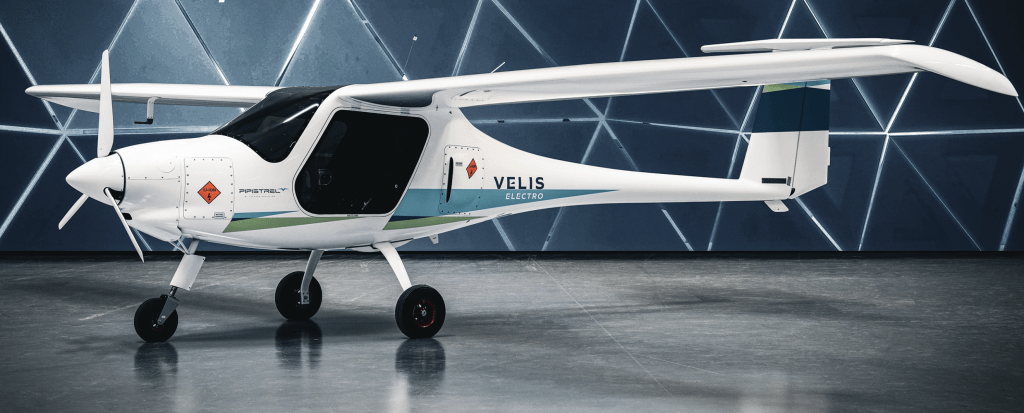
Credit: Lanier Flight Center
3.5 The Sustainable Frontier
The Electric Pattern Workhorse and the High-Performance Explorer
Models: Pipistrel Velis Electro, Pipistrel Explorer
Estimated 2026 Acquisition Cost: $200,000 – $285,000
Powerplant: Pipistrel E-811 (Electric) / Rotax 912 S3 (Certified)
Estimated Operating Cost: ~$7.00/hr (Electric) vs. 4.5 GPH (Gas)
In 2026, Pipistrel (now a Textron eAviation company) occupies a unique dual-role in fleet optimization. They offer the world’s only type-certified electric trainer for noise-sensitive urban environments and a high-performance, IFR-ready LSA for cross-country training. For schools facing community noise complaints or looking to lead in “Green Aviation” branding, Pipistrel is the primary solution.
The Weight and Payload Reality
The Velis Electro is the industry’s masterclass in weight management. Because it is powered by two 11kWh liquid-cooled batteries, it has a fixed “fuel” weight. Its MTOW of 1,322 lbs yields a useful load of 378 lbs. While this is tight for two large adults, it is perfectly suited for the 0-15 hour student-where lessons rarely exceed 45 minutes and focus heavily on pattern work. The Pipistrel Explorer, conversely, utilizes the Rotax 912 S3 and boasts a much more robust useful load, capable of night VFR and intentional spins.
The Infrastructure and AOG Profile
The shift to electric brings a new AOG variable: Charging Infrastructure. The Velis Electro requires a dedicated 3-phase charger, with a full charge taking roughly 1 hour and 20 minutes. For a high-utilization school, this requires a “staggered fleet” strategy where one aircraft charges while the other flies. Fortunately, since the acquisition by Textron, Pipistrel’s US support has integrated into the wider Textron Aviation parts network, giving US flight schools rapid access to critical components.
“The Velis Electro isn’t a replacement for your cross-country fleet; it is a surgical tool designed to own the ‘Pattern Work’ phase of flight training at a fraction of the cost and a fraction of the noise.”
Financing and the Student Experience
Underwriters treat the Velis Electro as a type-certified aircraft, which often results in lower liability premiums. Financially, the Velis Electro offers the highest “Operating Margin” of any aircraft in this guide; after the initial acquisition, the cost per hour is essentially just the local price of electricity and a small reserve for battery replacement.
For the student, the Velis operates at a remarkably quiet 60 decibels. This reduces student fatigue and allows for crystal-clear intercom communication. Instead of fuel pressure and oil temperature, students learn the “Digital Scan,” monitoring State of Charge (SoC) and battery health-perfectly preparing them for the future of electric regional airliners.
The 2026 “Mixed-Propulsion” Fleet Top-tier schools are now adopting a 1-to-4 ratio: for every four internal combustion trainers, they operate one Velis Electro. This electric unit handles 80% of the school’s introductory flights and pattern-work sorties, preserving the engine hours on their more expensive cross-country aircraft and significantly lowering the school’s overall noise footprint in the local community.
Section 4: The Economics of Fleet Optimization
The ROI Matrices
Acquiring a training aircraft is only the first financial hurdle; surviving its operation is the second. In 2026, optimizing a flight school fleet requires a shift away from focusing purely on the “Acquisition Cost” and toward Capital Efficiency-the measure of how much operating cash flow an asset generates relative to its total lifecycle cost, tax advantages, and required reserves. Below is the mathematical reality of operating a Legacy standard versus a Next-Gen LSA over a standard 2,000-hour engine lifecycle.
4.1 The Direct Operating Cost (DOC) Matrix
To accurately compare fleet options, operators must strip away fixed costs (hangar rent, insurance) and look strictly at the variable DOCs.
Assumption Baseline: Fuel is calculated at a 2026 average of $6.00/gallon (100LL or UL94).
Maintenance Reserves: Calculated by dividing the estimated engine overhaul cost by the 2,000-hour TBO.
| Cost Metric (Per Hour) | Legacy Heavyweight (Cessna 172S) | Premium 141 (Cirrus SR20) | Next-Gen Disruptor (Bristell / Van’s) | Sustainable (Pipistrel Velis) |
| Fuel / Energy Cost | $54.00 (9.0 GPH) | $66.00 (11.0 GPH) | $27.00 (4.5 GPH) | $7.00 (Electric) |
| Engine Reserve (TBO) | $22.50 ($45k/2,000hr) | $27.50 ($55k/2,000hr) | $15.00 ($30k/2,000hr) | $10.00 ($20k/2,000hr) |
| Routine Maintenance | $20.00 | $28.00 | $12.00 | $5.00 |
| Total Hourly DOC | $96.50/hr | $121.50/hr | $54.00/hr | $22.00/hr |
|
The 2,000-Hour Lifecycle Savings:
When a Next-Gen Disruptor (like a Bristell B23 or Van’s RV-12iS) reaches its 2,000-hour engine TBO, it has cost the flight school $108,000 in variable direct operating costs. Over that exact same 2,000-hour period, a Cessna 172S has cost $193,000. The Next-Gen aircraft generates $85,000 in pure cash flow savings per engine cycle. For a school operating five aircraft, that is nearly half a million dollars in preserved capital-enough to purchase two additional Next-Gen aircraft outright.
4.2 Structuring Maintenance and CapEx Reserves
A common trap for growing flight schools is treating operating revenue as pure profit, only to face a catastrophic cash crunch when an engine reaches TBO. Capital Expenditure (CapEx) reserves must be accrued hourly.
Engine Overhaul Reserves: A flight school must deposit $15.00 to $27.50 into a restricted reserve account for every hour the Hobbs meter runs. FADEC Rotax engines carry significantly lower overhaul costs (roughly $25,000 to $30,000) compared to legacy Lycoming IO-360s ($45,000+).
Airframe CapEx Reserves: Operators must accrue a separate Airframe CapEx reserve (typically $5.00 to $10.00 per hour) to cover major future events, such as 10-year parachute repacks or avionics screen replacements.
The Financing Trap: Operators must strictly align their CapEx reserves with their financing terms. A standard commercial aircraft loan amortizes over 10 to 15 years. However, a high-utilization flight school will hit a 2,000-hour engine TBO in just 2.5 years. Structuring fleet capitalization requires matching the debt instrument to the asset’s actual revenue-generating lifecycle. Capital efficiency means recognizing that a $230,000 Next-Gen aircraft financed at 8% is not a liability; it is a tax-advantaged revenue generator that pays its own debt service through fuel savings alone.
4.3 Capital Efficiency and Tax Strategies
Acquiring new Next-Gen aircraft allows flight schools to leverage powerful portions of the US Tax Code to drastically reduce their federal tax liability.
Section 179 Expensing: For the 2026 tax year, the IRS Section 179 deduction limit allows qualifying businesses to immediately deduct up to $2,560,000 of the purchase price. A flight school purchasing a fleet of four new Van’s RV-12iS aircraft could potentially deduct the entire purchase price from their 2026 gross taxable income.
Bonus Depreciation & MACRS: 100% Bonus Depreciation is available for eligible aircraft placed into service in 2026. Non-commercial flight training aircraft typically follow a highly advantageous 5-year MACRS depreciation schedule.
The Phantom Income Warning: If a flight school fully depreciates an aircraft over 5 years but finances the aircraft on a 15-year note, years 6 through 15 will generate revenue that is no longer shielded by aircraft depreciation. Strategic fleet rotation is the ultimate defense against this trap.
Section 5: Building the 2026 Fleet Architecture
The Math of the Mix for Part 61 and Part 141
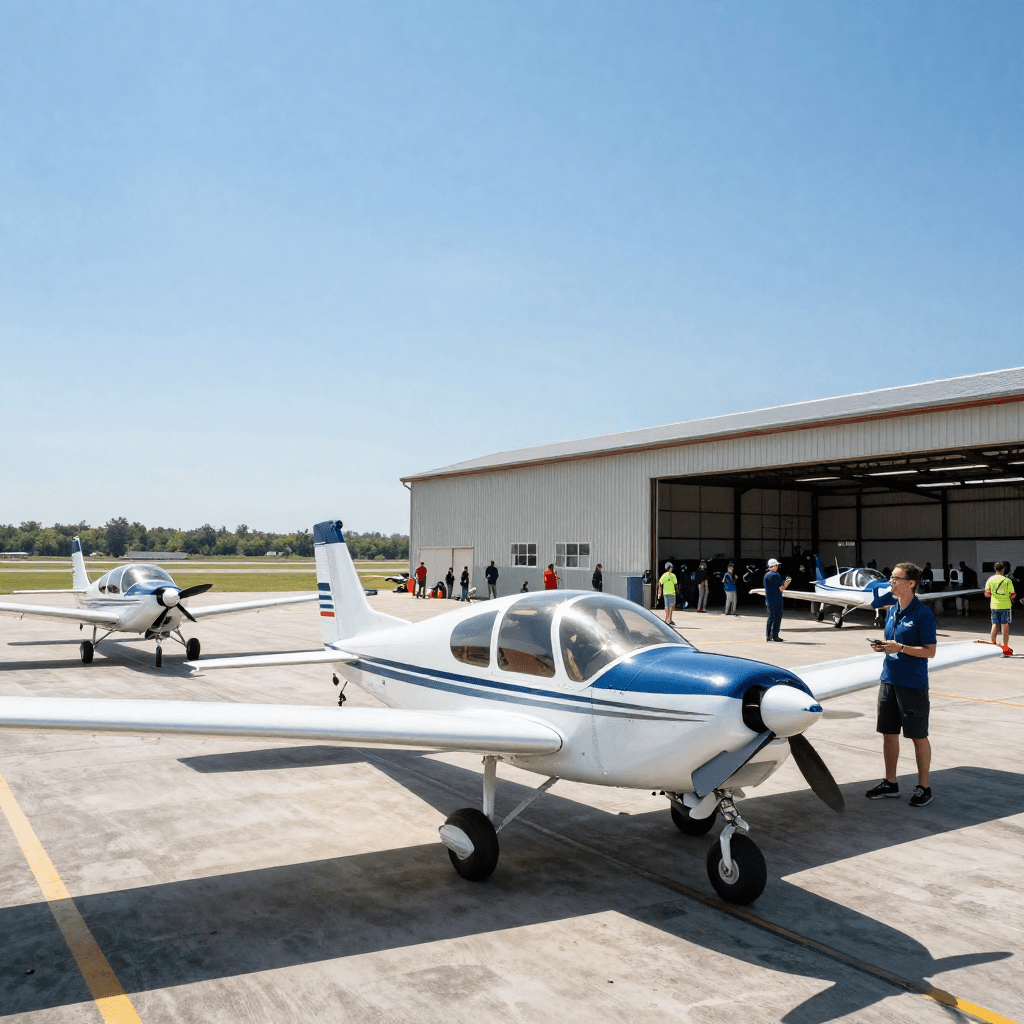
The ultimate goal of this guide is not to convince a flight school operator to sell their entire legacy fleet and buy unproven kit planes. Optimization in 2026 requires a “Mixed Fleet Architecture.” By utilizing the right asset for the right syllabus phase, an operator protects their profit margins during ab initio (primary) training while still delivering the complex, technically advanced experience required for commercial checkrides.
5.1 The Part 61 Local Flight School Model
The Goal: Minimize student acquisition costs, maximize cash flow, and eliminate international supply chain friction.
Local Part 61 schools operate on the tightest margins in the industry. They battle weather cancellations, part-time instructors, and students who are paying out of pocket rather than utilizing massive student loans. For this demographic, utilizing a $450,000 Cessna 172 burning 9 gallons of $6.00 avgas an hour for a student’s first 40 hours is financial malpractice.
The Recommended Aircraft Fleet Mix (per 5 Aircraft):
Three (3) Domestic or European Disruptors (e.g., Van’s RV-12iS, Vashon Ranger, Sling NGT or Bristell B23): These serve as the primary trainers. Acquiring three of these costs roughly the same as a single new Cessna 172. They will handle 100% of introductory flights and Private Pilot checkrides. At 600 flight hours per year, their 4.5 GPH fuel burn saves the school roughly $48,000 annually compared to a legacy fleet.
One (1) Sustainable/Electric Asset (e.g., Pipistrel Velis Electro): If the school is in a noise-sensitive community, integrating one electric aircraft offloads engine wear-and-tear from the gas fleet while driving the hourly operating cost down to just $7.00.
One (1) Legacy Heavyweight (e.g., Cessna 172S or Piper Archer): This is the dedicated IFR and Commercial workhorse. It is used strictly for advanced cross-country work, instrument training in actual IMC, and CFI checkrides.
5.2 The Part 141 University Program Model
The Goal: Maintain institutional prestige, satisfy airline-pipeline requirements, and integrate cost-reducing certified assets.
Collegiate Part 141 programs have a completely different mandate. They are essentially pre-airline academies. Their aircraft regularly exceed 800 to 1,000 flight hours a year. Because their students often utilize federal financial aid, the school can command higher hourly rental rates. However, even these well-capitalized programs cannot ignore the impending 100LL phase-out or the brutal operating costs of their fleets.
“Fleet optimization is not about replacing every aircraft you own; it is about ensuring you never use a $700,000 asset to teach a 10-hour student how to fly straight and level.”
The Recommended Aircraft Fleet Mix (per 10 Aircraft):
Four (4) Premium 141 Workhorses (e.g., Cirrus SR20 TRAC): These are the flagship assets. They provide the complex FMS and single-lever power training that regional airlines expect from collegiate graduates.
Four (4) Certified Next-Gen Disruptors (e.g., Tecnam P-Mentor): This is the strategic pivot for 2026. The P-Mentor is CS-23/Part 23 certified, fully IFR capable, and utilizes Garmin G3X Touch avionics, but burns only 4.5 GPH of unleaded fuel. By shifting the bulk of Private and Instrument training to these efficient airframes, universities drastically reduce exposure to 100LL price shocks while maintaining regulatory pedigree.
Two (2) Legacy Heavyweights (e.g., Piper Seminole / Cessna 172): Retained primarily for multi-engine add-ons or specific standardized testing where legacy familiarity is still preferred by examiners.
Managing the “Mixed-Fleet” Syllabus The most common objection from Chief Flight Instructors regarding a mixed fleet is the transition time: “If a student learns in an RV-12, won’t they struggle to fly the Cessna 172 for their instrument rating?” Data from progressive schools shows the opposite. Students who master basic airmanship in the highly responsive, stick-and-rudder environment of an LSA actually transition to heavier, more stable legacy aircraft in a fraction of the time it takes a legacy student to learn advanced avionics. By standardizing the avionics suite (e.g., Garmin G3X to Garmin G1000), the visual scan transfers seamlessly.
Section 6: Capitalizing the Fleet
Financing with FLYING Finance
Knowing exactly which Next-Gen aircraft will optimize your 2026 operations is only half the battle; acquiring them without suffocating your cash flow is the other. The aviation finance market is notoriously difficult for flight schools. Many traditional banks simply do not understand the asset class, and retail aviation lenders often bury restrictive “commercial use limits” into their loan covenants, effectively punishing operators for flying their aircraft too much.
At Flying Finance, we approach aviation lending through both the lens of a CFO, and as a pilot. We do not view training aircraft as recreational assets; we underwrite them as pure revenue-generating machines.
The Part 61 “Bread and Butter” vs. Heavy Part 141 Operations Our absolute “bread and butter” is the Part 61 local flight school. We excel at helping independent operators transition away from their aging, maintenance-heavy legacy fleets and into the high-margin European and Domestic Disruptors. We understand the consensus-based LSA and MOSAIC categories intimately, meaning our underwriters do not hesitate when you ask to finance an aircraft powered by a FADEC Rotax engine.
However, our capital bench is deep. For Part 141 institutional programs, we provide robust commercial fleet financing capable of handling multi-million-dollar acquisitions of premium assets (like the Cirrus SR20 TRAC), built around the accelerated amortization required for extreme 1,000-hour-a-year utilization rates.
The Flying Finance Capital Toolkit
No two flight schools have the same balance sheet. We offer specific financial mechanisms tailored to your exact operational lifecycle:
SBA Lending Options: Traditional banks often demand 25% to 30% cash down. By leveraging SBA programs (like the 7(a) loan), we can often secure much lower down payments and longer repayment terms, preserving your liquid cash for payroll and marketing.
Whole Flight School Acquisitions: We can finance an entire business acquisition (goodwill, hangar leases, aging fleet) under one structured umbrella, providing the capital to close the deal and initiate an immediate fleet refresh.
New Flight Schools (Startups): Flying Finance utilizes structured startup capital and SBA-backed guarantees to help well-credentialed founders solve the “chicken-and-egg” problem and get their first Next-Gen assets on the ramp.
Fleet Expansions & Refreshes: When it is time to cycle out your 100LL-dependent legacy heavyweights, we coordinate the financing of your new MOSAIC trainers while helping you navigate the tax-advantaged rotation of your fully depreciated assets.
Overcoming the “Commercial Use” Clause A massive hurdle for flight schools is discovering that their retail aircraft loan explicitly caps annual usage (e.g., a maximum of 300 hours per year) or strictly prohibits commercial primary flight instruction. If violated, the lender can call the note due immediately. Flying Finance specializes specifically in commercial-use aviation debt. We expect and encourage you to fly your aircraft 800 hours a year, and our loan terms are structurally designed to support that high-volume reality.
Your 2026 Next Step
The transition away from legacy aircraft and 100LL fuel is not a future possibility; it is the current 2026 reality. Delaying fleet optimization simply means leaving thousands of dollars in fuel and maintenance savings on the table every single month.
Ready to optimize your flight school’s margins? We will take your current hourly flight volume, run it against the exact DOC matrices outlined in this guide, and build a custom financing proposal showing exactly how much capital a Next-Gen fleet refresh will return to your bottom line.
Disclaimer: The financial, tax, and ROI scenarios presented in this guide are for illustrative purposes only. Flying Finance does not provide tax, legal, or accounting advice. Consult with aviation CPAs regarding your 2026 corporate filings.
Change is happening.
Is your fleet optimized for it?
The math of running a flight school is fundamentally broken. Download the free 34-page Fleet Optimization Guide to see exactly how Next-Gen aircraft can return half a million dollars to your bottom line.